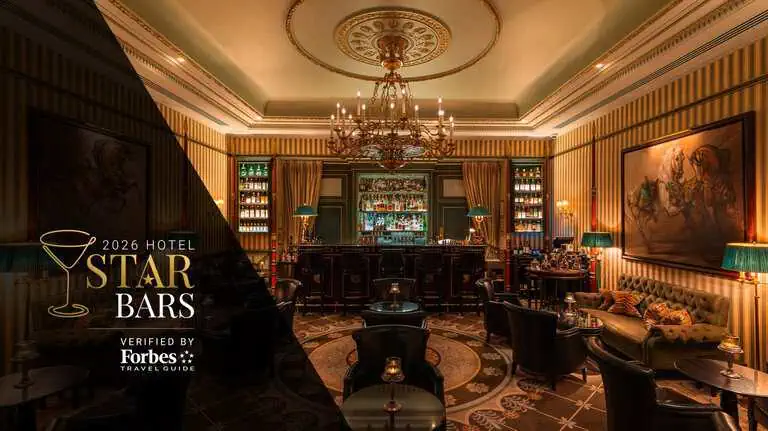
Luxury travelers are increasingly choosing hotels not only for rooms and spas, but for standout bar experiences that blend local culture, design and destination storytelling. Reflecting this shift, Forbes Travel Guide has unveiled its 2026 Hotel Star Bars list, spotlighting elite hotel bars across 18 countries as cocktail culture becomes a defining part of global hospitality competition.
The annual ranking highlights how luxury hotels are investing heavily in immersive beverage programs, rooftop venues and locally inspired cocktail concepts to attract both travelers and local residents. This article contains affiliate links. We may earn a commission at no extra cost to you.
Key Facts
- Brand: Forbes Travel Guide
- Coverage: 2026 Hotel Star Bars list
- Countries Included: 18
- Leading Cities: Shanghai and Tokyo
- Major Hotel Groups: Hilton Luxury, Luxury Group Marriott International
- Key Trend: Hotel bars evolving into destination-led social experiences
- Repeat Winners: Five returning bars retained recognition
Key Takeaways
- Luxury hotel bars are becoming major travel decision drivers.
- Shanghai and Tokyo lead Asia’s luxury cocktail scene.
- Hotels increasingly use local ingredients and cultural storytelling.
- Zero-proof cocktails are now mainstream in luxury hospitality.
- Independent boutique hotels are competing with global brands.
What is the 2026 Hotel Star Bars list?
Forbes Travel Guide’s 2026 Hotel Star Bars ranking recognizes luxury hotel bars delivering exceptional beverage programs, service standards and guest experiences worldwide.
FTG inspectors visited each venue anonymously as paying guests, evaluating cocktails, presentation, food offerings and hospitality consistency. The final list spans the Americas, Asia-Pacific, Europe and the Middle East.
The ranking reflects a wider hospitality shift: hotel bars are no longer secondary amenities. They are increasingly positioned as standalone attractions capable of drawing both international travelers and affluent local customers.
Shanghai and Tokyo emerged as the strongest-performing cities, each earning three winning venues.
Repeat winners included Le Bar at Capella Shanghai, Jian Ye Li, Le Bar Américain at Hôtel de Paris Monte-Carlo and The St. Regis Bar at The St. Regis Macao.
Why do hotel bars matter more to travelers now?
Luxury travelers increasingly seek social experiences embedded within hotels rather than separate nightlife venues.
That trend accelerated after global travel reopened, as hotels expanded food-and-beverage offerings to keep guests spending more time on property. Rooftop lounges, destination-inspired cocktails and chef-led bar menus have become competitive differentiators for luxury brands.
At the same time, travelers are prioritizing experiences tied to local identity. Many bars on the 2026 list incorporate regional ingredients, local spirits and cultural narratives into cocktail programs.
Examples include Hainan-inspired drinks at Sky Bar at The Sanya EDITION and Korean ingredient-driven cocktails at The Library at The Shilla Seoul.
The rise of premium non-alcoholic cocktails also reflects changing traveler behavior. Luxury hotels are increasingly catering to wellness-conscious guests and younger travelers seeking sophisticated social experiences without alcohol.
Asia-Pacific leads the luxury hotel bar movement
Asia-Pacific dominated the 2026 rankings, with Shanghai, Tokyo, Singapore and Seoul securing multiple entries.
Notable winners included Aura Lounge at The Ritz-Carlton Shanghai, Pudong, The Bvlgari Bar at Bvlgari Hotel Tokyo and The Pineapple Room at Capella Singapore.
The region’s success reflects broader tourism and luxury travel momentum across Asia, where international arrivals, premium hospitality investment and high-spending travelers continue rebounding strongly.
Many of the selected bars combine panoramic city views, destination storytelling and high-end culinary experiences, aligning with growing demand for experiential luxury travel.
Tokyo’s hotel bar scene, for example, increasingly blends Japanese whisky culture, art-driven interiors and contemporary cocktail craftsmanship. Shanghai venues similarly emphasize nostalgia, local flavors and elevated nightlife experiences.
Europe’s classic hotel bars remain global icons
European hotel bars on the list showcased a mix of heritage luxury and modern reinvention.
Recognized venues included Claridge’s Bar at Claridge’s, Le Bar Botaniste at Shangri-La Paris and Vault Bar at Waldorf Astoria Amsterdam.
Many of Europe’s winning bars leveraged historical identity as a core attraction. In Edinburgh, Bar Prince at The Balmoral connected cocktails to Scottish cultural figures and whisky heritage.
Monaco’s Le Bar Américain at Hôtel de Paris Monte-Carlo continued capitalizing on its Grand Prix prestige and Riviera glamour.
The European selections also highlighted how luxury hotels are using bars to preserve cultural identity while attracting younger affluent travelers.
How are global hotel brands competing?
Major hotel groups dominated the rankings.
Hilton Luxury and Luxury Group Marriott International each secured six placements, underscoring how large hospitality companies are investing heavily in premium food-and-beverage concepts.
However, independent boutique hotels also performed strongly. Six standalone luxury properties earned recognition, signaling growing consumer demand for intimate, design-led hospitality experiences.
Properties such as Art Paradiso Boutique Hotel and 100 Princes Street demonstrated how smaller luxury hotels can compete through highly personalized concepts and storytelling.
This reflects a wider hospitality trend where distinctive identity increasingly matters as much as brand scale.
About the Destination
Cities featured on the 2026 Hotel Star Bars list continue benefiting from strong luxury tourism demand and international air connectivity.
Destinations including Shanghai, Tokyo and Singapore remain major hubs for premium hospitality investment, international events and affluent travelers.
Meanwhile, resort destinations such as Sanya, Dubai and Malé are increasingly positioning luxury hotel nightlife as part of the broader destination experience.
As competition intensifies among global tourism hubs, standout hotel bars are becoming tools for destination branding and traveler retention.
Industry Insight
The 2026 Hotel Star Bars list reflects a larger evolution in luxury hospitality: food-and-beverage venues are increasingly driving hotel identity and revenue strategy.
Travelers now expect hotels to deliver immersive lifestyle experiences rather than simply accommodation. This is pushing luxury brands to invest in rooftop venues, experiential cocktail programs and locally rooted concepts.
The growing emphasis on zero-proof cocktails and wellness-aligned menus also signals changing consumer preferences, particularly among younger luxury travelers seeking more balanced travel experiences.
For destinations, award-winning hotel bars are becoming tourism assets capable of attracting affluent visitors, media attention and local social traffic year-round.
Check Availability
Travelers planning luxury city breaks or resort stays can compare hotel rates and experiences across platforms including Booking.com, Trip.com, Agoda and Expedia. Travelers looking for tours, nightlife experiences and local activities can also explore options through Klook.
For more curated travel gear recommendations and exclusive reader offers, readers can explore our Travel Recommended Travel Products
Travelers interested in this story may also enjoy:
Park Hyatt Changsha Earns Forbes Travel Guide Four-Star Award
Wynn Resorts Earns 18 Forbes Travel Guide Five-Star Awards for 2026, Extends Industry Record
Forbes Travel Guide 2026 Star Awards Reveal New Five-Star Hotels Across 100+ Countries
Raffles Hotel Le Royal’s Elephant Bar Named Among World’s Best Hotel Bars
Editorial disclosure: This article is an independently written editorial analysis based on industry reporting from Forbes Travel Guide and insights from Jennifer Kester. The content has been rewritten and contextualised for editorial clarity and relevance.
