Luxury hotels have become very good at adding things.
More hotel brands. More amenities. More room categories. More collaborations. More language around personalization, wellness, culture, and discovery. Yet the more that gets added, the clearer it becomes that abundance and luxury are not the same thing.
Luxury isn’t about providing guests with everything they might want. Instead, it is about delivering exactly the right experience at exactly the right moment.
Across the luxury hospitality industry, this has become one of the defining challenges.
Room rates have climbed sharply, and guests have continued to pay them—so far. However, affluent travelers are discerning consumers. They do not object to paying premium prices, but they do expect premium value.
Increasingly, they ask a simple question:
“What am I actually paying for?”
Did the experience truly justify the rate? Or did they leave wondering why they had paid US$50 for a canned minibar cocktail they had to open and serve themselves?
(Yes, this happened to me—and not at a Kempinski hotel.)
Ultimately, the future of luxury hospitality will not belong to the hotels that add the most amenities or create the most upselling opportunities. Instead, it will belong to those that create value with greater intention and emotional precision.
A Michelin-starred chef does not earn recognition by putting more food on the plate. Every ingredient has a purpose.
Likewise, at Kempinski, we are asking ourselves a different question. Rather than asking, “What more can we give?” we ask, “What truly elevates a guest’s stay, makes it memorable, and inspires them to return?”
This is not a new philosophy. It is deeply rooted in Kempinski’s heritage—and one we believe the hospitality industry needs to rediscover.
Editorial disclosure: This editorial is independently written and contextualised by Red Bird Travel News based on the original thought leadership article by Barbara Muckermann, “The End of More for More’s Sake.” The original article has been adapted for editorial clarity, readability and relevance while preserving the author’s core perspectives.
Price Has Moved Faster Than Desire
Before joining hospitality, I spent many years working in luxury fashion. One lesson became immediately clear: value has never been about the object alone.
A handbag carries belongings. A watch tells the time. Functionally, their purpose is straightforward.
However, people do not desire luxury products simply because they work. They desire the craftsmanship, heritage, service, atmosphere, and emotional connection surrounding the brand.
When prices rise faster than emotional value, even the wealthiest consumers begin questioning whether the purchase still feels worthwhile.
Luxury hospitality risks making the same mistake.
A luxury hotel room offers an exceptional bed, a quiet environment, and a spacious bathroom. Yet if those become the only measures of luxury, guests will naturally compare them with every other luxury hotel offering similar comforts.
True luxury begins when guests feel genuinely recognised through intentional hospitality.
Intentional hospitality means designing an experience around the guest without assuming they need everything. It provides what is genuinely useful—and sometimes what guests did not even realise they needed.
Above all, it creates recognition without intrusion, pleasure without exploitation, and experiences shaped through thoughtful human judgement.
Unfortunately, our industry has often tried to justify higher prices through accumulation.
Hotels add increasingly elaborate breakfasts, larger suites, infinity pools, wellness concepts, and designer collaborations. Yet once every luxury hotel offers the same features, they stop being points of differentiation.
Instead, they simply become the new baseline.
Why Generosity Matters More Than Endless Choice
Choice presents a similar challenge.
Guests appreciate options when those choices provide meaningful control. However, too many decisions often become another burden.
A pillow menu with ten different selections may appear personalised. Yet after a long-haul flight, most travellers simply want a comfortable pillow waiting for them.
The real essence of hospitality is generous hosting.
Importantly, generosity is not measured by quantity. Rather, it is measured by how accurately a hotel understands what guests genuinely need.
Generosity means anticipating important details before guests have to ask.
Instead of creating more complexity, luxury hospitality should remove it.
Kempinski’s Heritage of Intentional Hospitality
This philosophy has always been part of Kempinski’s DNA.
When the telephone arrived in Berlin, Berthold Kempinski immediately recognised how technology could expand his business. More importantly, he also understood how innovation could improve the guest experience.
In the 1880s, he delivered fresh oysters directly to customers’ homes. His team even shucked the oysters on arrival, ensuring perfect freshness while eliminating the inconvenience for guests.
Commercially, it was a smart decision.
Emotionally, it was even smarter.
Innovation served hospitality—not the other way around.
That is precisely the spirit we seek to reinterpret today.
For Kempinski, generosity is not about promotions or endless amenities. It is one of the pillars of the Good Life and the foundation of genuine hospitality.
That generosity may appear as complimentary local drinks and snacks replenished daily in the minibar. It may take the form of a coffee-and-cookie trolley welcoming both guests and local residents.
The individual expression will differ from hotel to hotel. Nevertheless, the principle remains consistent.
Certain pleasures should feel naturally included in the guest experience rather than becoming another opportunity for revenue.
Why Generosity Makes Business Sense
None of this ignores the commercial realities of operating hotels.
Meaningful inclusions require investment, and owners rightly expect returns.
However, thoughtful generosity creates value in different ways.
It strengthens guest loyalty.
It encourages repeat visits.
It supports healthier occupancy.
Over time, it also strengthens pricing power because guests perceive genuine value rather than transactional pricing.
The real question is not whether hotels should give more away.
Instead, it is where relatively modest investments can generate significantly greater emotional and commercial returns.
Most importantly, guests should never feel that every enjoyable moment has been transformed into another sales opportunity.
They should feel hosted—not processed.
The Future of Luxury Hospitality
That is the standard Kempinski must continue pursuing.
Not more for more’s sake.
Not abundance as performance.
Instead, generosity with intention.
Hospitality that allows every guest to feel recognised, respected, and completely at ease.
Ultimately, the future of luxury hospitality will belong to hotels with the confidence to offer exactly what matters—at exactly the right moment.
About Barbara Muckermann
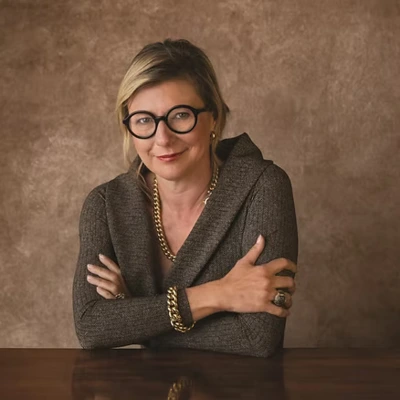
Barbara Muckermann is Chief Executive Officer of Kempinski Group, leading one of the world’s oldest luxury hospitality brands with more than 75 hotels in 33 countries. She brings over 25 years of leadership experience across luxury hospitality, travel and lifestyle, having previously led Silversea Cruises and held senior executive roles with Loro Piana, MSC Cruises and NCL. She is the first woman to lead Kempinski in the company’s 127-year history. Muckermann holds a Doctorate in Political Sciences and Economics, as well as a joint MBA from Columbia Business School and London Business School.
Related Coverage
Discover the World’s Hidden Luxury: Kempinski’s Collection of Off-the-Beaten-Path Escapes
Kempinski Festive Season 2025: Global Celebrations & Timeless Traditions
Kempinski Properties Around the Globe Celebrate the Month of Love
Grand Hotel des Bains Kempinski St. Moritz Elevates Alpine Luxury This Winter
