Disclosure: This article contains affiliate links. We may earn a commission at no extra cost to you.
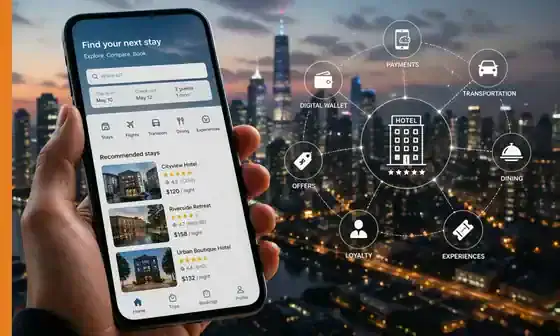
Platform-driven hotel distribution refers to a digital ecosystem model where large technology platforms influence how travelers discover, compare, and book accommodation. Instead of relying primarily on direct hotel websites or traditional online travel agencies, hotels increasingly appear within broader platforms that combine payments, mobility services, dining, and travel experiences.
The shift reflects a wider change in digital travel behavior, where discovery and booking are embedded inside multi-service ecosystems rather than standalone booking channels.
Key Facts
- Topic: Platform-driven hotel distribution
- Industry: Global hospitality and travel technology
- Current trend: Integrated booking within digital ecosystems
- Key feature: Platforms influence hotel visibility, pricing, and demand
- Markets leading the shift: China and parts of Asia
Key Takeaways
- Travel discovery is moving beyond standalone booking platforms.
- Digital ecosystems increasingly control customer traffic and booking flows.
- Hotel brands face reduced visibility inside platform environments.
- Customer data and payment systems are central to platform influence.
What Is Platform-Driven Hotel Distribution?
Platform-driven hotel distribution describes a model in which third-party digital ecosystems manage how travelers discover and book accommodation.
In this structure, hotel inventory is embedded within platforms that combine multiple services such as transport, payments, dining reservations, and travel experiences. Algorithms and user-data systems determine which hotels appear in search results and how they are presented to potential guests.
Unlike traditional distribution models, where hotels rely on brand websites or standalone booking platforms, the platform approach places accommodation inside a broader digital environment that controls visibility and conversion.
Hotel Distribution Models: OTA vs Platform vs Super App
| Model | Primary Function | Customer Relationship | Control of Demand | Examples |
|---|---|---|---|---|
| OTA (Online Travel Agency) | Hotel search and booking | Transactional | Medium | Booking-focused platforms |
| Platform | Integrated discovery, booking, and data ecosystem | Ongoing / data-driven | High | Search and digital travel ecosystems |
| Super App | Multi-service ecosystem including payments and mobility | Embedded in daily behavior | Very High | Multi-service digital platforms in Asia |
The transition from OTA-driven booking toward platform ecosystems reflects how travelers increasingly interact with travel services through unified digital environments.
From China to a Broader Model
China currently represents the most advanced example of platform-driven hotel distribution.
Domestic digital ecosystems increasingly determine how travelers discover, book, and pay for accommodation. In these markets, hotel booking is only one component of a broader digital experience that includes transport, food delivery, entertainment, and payment services.
While this model remains most developed in China, similar patterns are emerging in other regions.
Technology Platforms Expand Their Influence
A growing number of technology platforms are integrating travel services into broader digital ecosystems.
In Southeast Asia, super apps increasingly combine transport, digital payments, and local services with accommodation booking. Similar integration exists in China, where travel booking is embedded within wider digital marketplaces.
Western markets are also seeing early signs of this shift as major technology companies expand their travel-related services and strengthen their influence over travel discovery.
Global technology companies are also strengthening their role in travel distribution. Platforms such as Google Travel hotel search help travelers compare accommodation options and influence how hotels appear in search results.
Distribution Converges With Payments and Data
One defining feature of platform-driven hotel distribution is the integration of booking systems with digital payment infrastructure and customer data networks.
Platforms increasingly combine loyalty systems, digital wallets, and behavioral data to personalize travel recommendations. As a result, accommodation options are often presented as part of a curated travel journey rather than a standalone booking search.
This integration allows platforms to control more stages of the customer journey, from inspiration to final booking.
Early Signals in North America and Europe
Hotel distribution in North America and Europe remains relatively fragmented compared with Asia.
Global online travel agencies and direct hotel websites still play a major role in these markets. However, tighter connections between travel booking, payments, and customer data systems suggest that platform integration is gradually expanding.
While the level of consolidation seen in China has not yet emerged in Western markets, the direction of travel points toward greater platform influence.
Industry analysis from Skift travel industry analysis has highlighted how digital ecosystems are gradually expanding their influence across travel booking and discovery.
What Does This Mean for Hotel Operators?
For hotel operators, platform-driven hotel distribution represents a structural shift in how demand is generated and controlled.
Hotels may have less direct influence over customer relationships and pricing visibility as booking activity increasingly occurs within platform environments. At the same time, these ecosystems can deliver large volumes of potential customers through integrated digital services.
This dynamic creates a dual relationship in which platforms operate both as distribution partners and as gatekeepers to travel demand.
Industry Insight
The expansion of platform-driven hotel distribution reflects a broader trend in the digital economy: consumer services are consolidating within large ecosystems that control both user traffic and transactional infrastructure.
For hospitality companies, maintaining brand differentiation may become more challenging as travel discovery increasingly occurs inside platform-driven environments rather than brand-led booking channels.
Research from Phocuswright travel research suggests that travel platforms are increasingly influencing how travelers discover accommodation, particularly through integrated mobile ecosystems.
Booking Hotels
Travelers comparing hotel options across different platforms can check availability through major booking sites such as Booking.com, Trip.com, Agoda, Expedia, and Klook, which remain key channels for global accommodation reservations.
• Booking.com
• Agoda
• Trip.com
• Expedia
• Klook
Travel Tools
For travel gear, booking tools, and services frequently used by travelers, see our curated recommendations.
Related Coverage
Travelers interested in platform-driven hotel distribution trends in China may also enjoy these related articles:
China Hotel “Manachising” Model Enables Rapid Expansion for Domestic Operators
China Hotel Market Distribution Dominated by Tripcom, Meituan and Fliggy
Editorial disclosure: This article is an independently written editorial analysis based on industry reporting from HNR Hotel News. The content has been rewritten and contextualised for editorial clarity and relevance.
