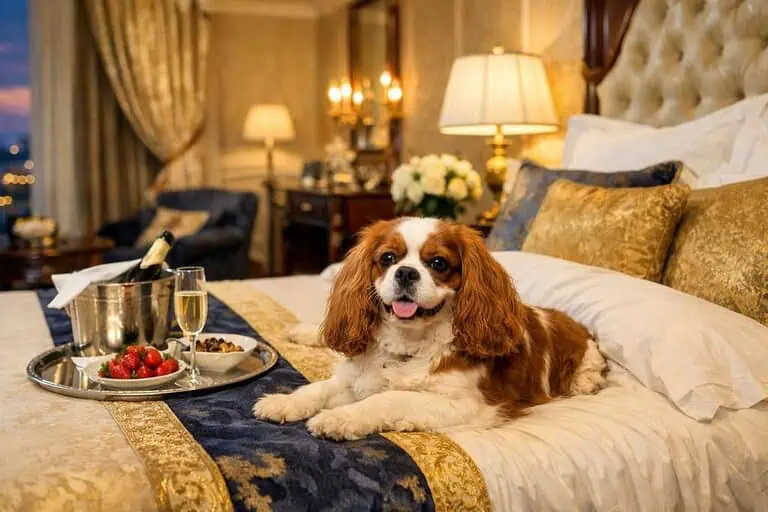
As more travellers bring dogs instead of leaving them behind, luxury hotels are treating pets as “Very Important Pets.” Insights shared by South Place Hotel London show that embracing dog-friendly luxury is driving weekend occupancy, boosting ancillary revenue and reshaping guest loyalty — creating a clear commercial opportunity for urban hotels seeking growth.
A growing shift in luxury hospitality
Pets have long been considered part of the family, but luxury hotels are increasingly treating them as valued guests in their own right. What was once viewed as an operational challenge is now emerging as a strategic advantage — particularly for city hotels looking to diversify demand beyond corporate travel.
This trend was explored in a recent episode of Matt Talks, where Mews CEO Matt Welle spoke with Dean Culpan, General Manager of London’s South Place Hotel. Their discussion highlighted how a deliberate move into very important pets luxury has helped the hotel improve weekend performance while strengthening emotional loyalty among guests.
Travelers can find more information about South Place Hotel and explore accommodation details on Expedia. Some links in this article are affiliate booking links, which may earn me a small commission at no extra cost to you.
For hotels facing soft leisure demand or underperforming weekends, the message was clear: pets may be the missing piece.
Treating pets as VIPs — not exceptions
At South Place Hotel, the philosophy is simple: dogs are not an inconvenience, they are VIPs — Very Important Pets.
When guests arrive with their dogs, the welcome experience is extended to all members of the party. Dogs receive personalised greeting cards, curated in-room amenities and thoughtful touches designed to mirror the hotel’s human luxury offering.
“It’s not just the guest,” Culpan explains. “The dog gets welcomed as well.”
The approach is both personal and commercial. A lifelong dog lover himself, Culpan identified a gap in the City of London market, where many business-focused hotels struggled to attract weekend leisure travellers.
“One of my first strategies was asking: why aren’t we dog friendly?” he says.
By repositioning the hotel to appeal to guests travelling with pets, South Place unlocked a new leisure audience without diluting its luxury credentials.
Designing a dog-friendly luxury ecosystem
Rather than offering token gestures, South Place invested in a fully integrated dog-friendly experience.
In-room amenities include:
- Plush dog beds
- High-quality food and water bowls
- Launderable rugs designed for pets
- Dedicated room configurations for repeat canine guests
Some dogs even have preferred room set-ups reserved exclusively for them. One returning guest, Winston the bulldog, famously has his own designated bed that no other dog is allowed to use.
“His owner wants the same bed every time,” Culpan shares.
Beyond the room, the experience extends into food and beverage. The hotel offers dedicated dog menus featuring seasonal dishes and playful additions such as pup-friendly “martinis,” reinforcing the sense that pets are the very part of the occasion, not an afterthought.
Staff training and operational detail matter
A successful dog-friendly strategy relies as much on people as it does on products.
Housekeeping and front-of-house teams are trained to interact calmly and confidently with dogs, ensuring safety and comfort for all guests. Clear guidelines help staff manage rooms, shared spaces and service interactions without friction.
Even South Place’s Michelin-starred restaurant accommodates very important pets in designated areas, following strict behavioural and hygiene protocols.
Culpan recalls a Chihuahua dining on the terrace without causing disruption. “It was the most polite dog in the world,” he says. “Nobody complained.”
Revenue, referrals and repeat stays
The commercial impact of very important pets has been tangible.
At weekends, South Place went from hosting virtually no pets to accommodating three to five dog-friendly rooms consistently. Awareness was driven through SEO, multilingual content and social media storytelling, supported by organic referrals from satisfied guests.
Word-of-mouth, Culpan jokes, is harder to track among the very important pets — but their owners are vocal advocates.
Guests travelling with pets also tend to:
- Spend more on in-hotel dining
- Order additional room service
- Extend their stays
- Return more frequently
To enhance the experience further, the hotel curates local guides highlighting dog-friendly walks, parks and neighbourhood venues, extending the value of the stay beyond the property.
A reflection of wider lifestyle trends
The strategy also aligns with broader social shifts.
“A lot more of our clients are going to bring their pets with them rather than children,” Culpan notes.
As lifestyles change, hotels that adapt their offerings accordingly are better positioned to capture long-term loyalty — particularly in competitive urban markets where differentiation is increasingly difficult.
Practical advice for hoteliers
For operators considering a similar move, Culpan emphasises mindset over gimmicks.
“It’s having the attitude, staff training, staff understanding, and extending that hospitality not only to the guests, but also to the guest’s fluffy friend,” he says.
Luxury and dog-friendliness, he adds, are not mutually exclusive.
A blueprint for modern hotels
South Place Hotel’s experience demonstrates that welcoming pets can deliver measurable business benefits when executed thoughtfully.
By identifying underserved demand, investing in operational detail and training teams to deliver inclusive hospitality, hotels can:
- Improve weekend occupancy
- Increase on-property spend
- Build stronger emotional loyalty
- Differentiate in crowded urban markets
In an era where guest experience is increasingly personal, a well-loved pet may be one of the most powerful — and profitable — loyalty drivers available.
Source: Insights adapted from “Dogs Are the New VIPs” by Tom Brown, Principal Copywriter at Mews, originally published on Hospitalitynet.
At a Glance
- Trend: Luxury hotels embracing dog-friendly hospitality
- Case study: South Place Hotel, London
- Business impact: Higher weekend occupancy and increased guest spend
- Key drivers: Thoughtful amenities, staff training, SEO and word-of-mouth
- Guest insight: Pets are increasingly travelling companions, not exceptions
- Takeaway: Treat pets as VIPs (very important pets) to unlock new leisure demand and long-term loyalty
Also read Marriott Bonvoy Launches “Pawssible Journey”: A Pet-Friendly Programme for Greater China
