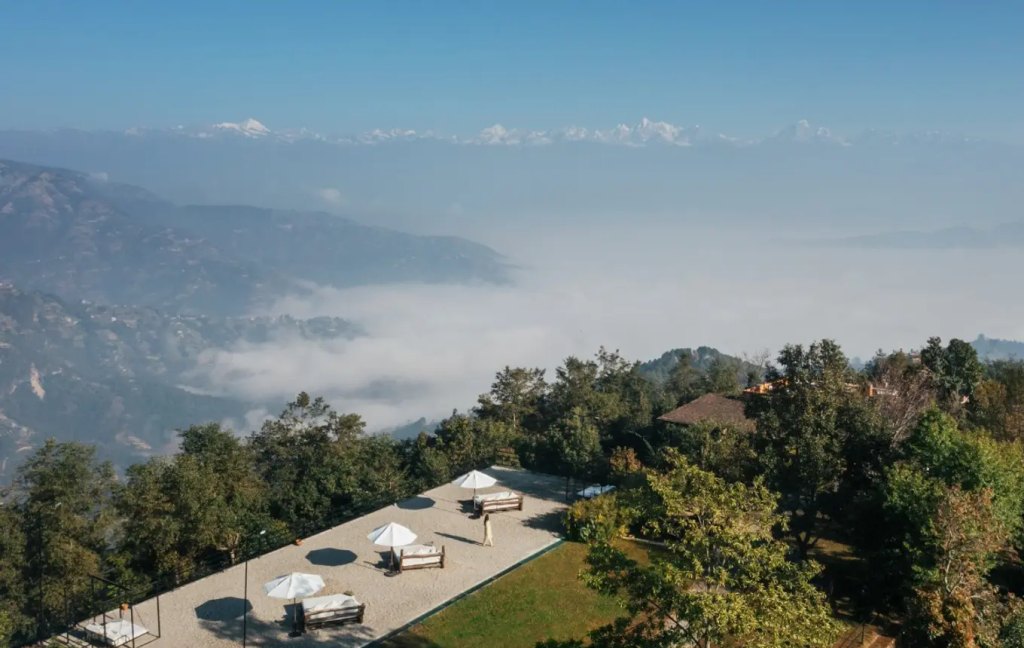
Dwarika’s Sanctuary, located on a hillside near Dhulikhel, Nepal, offers wellness retreats based on Hindu and Buddhist traditions, Ayurvedic therapies, yoga and meditation. About an hour from Kathmandu airport, the retreat overlooks the Himalayas and draws on local philosophies and practices that have shaped Nepali life for thousands of years.
The property complements The Dwarika’s in Kathmandu, combining a countryside wellness stay with opportunities to explore the capital’s architecture, crafts and contemporary culture.
This year, Dwarika’s Sanctuary introduced three-night retreats designed to give travellers a closer look at Nepali wellness practices and lifestyles. Guests can also stay longer, with programmes combining traditional therapies, spiritual activities and time in the surrounding natural environment.
Set among terraced hillsides, forests and fields, the retreat offers activities ranging from Ayurvedic treatments to monastery visits. Its approach centres on the relationship between physical wellbeing, spiritual practices and the natural landscape.
Kathmandu: The Story Behind The Dwarika’s
The Dwarika’s was founded in the early 1970s by Dwarika Das Shrestha, who sought to preserve centuries-old Newari architecture as historic buildings were being demolished and traditional artisanal skills came under pressure.
He built the hotel using salvaged pillars, windows, doors and carved eaves collected from across the Kathmandu Valley. His family has continued that preservation work.
The hotel’s courtyard remains central to its character. Intricate wood carvings depict gods, demons and animals, while robed flutists perform in the evening before dinner.
Today, the property is overseen by René Vijay Shrestha Einhaus, the founder’s grandson. Guests can stay for one or two nights before travelling to Dwarika’s Sanctuary, using the capital as an introduction to Nepal’s architectural heritage and cultural traditions.
During their stay, guests can meet René Vijay over tea to hear about his grandfather’s work. They can also join master carvers for hands-on woodcarving sessions and learn techniques used in Newari architecture.
Visits to nearby temples, the Buddha Stupa and the UNESCO heritage sites of Bhaktapur and Durbar Square provide further insight into the region’s religious and cultural traditions.
The Dwarika’s Collection also connects visitors with contemporary Kathmandu. Guests can explore galleries where young artists reinterpret traditional painting and sculptural motifs, shop with René’s wife, Shavona, who runs an ethical fashion brand, and visit restaurants that are reworking Newari cuisine.
These experiences present Kathmandu as a destination in its own right, rather than simply a starting point for trekking trips.
What Is Himalayan Wellbeing?
Global wellness trends in recent years have increasingly focused on longevity, biometric tracking and technology-assisted treatments. Dwarika’s Sanctuary instead emphasises spiritual traditions and established approaches to wellbeing.
Nepal has deep historical connections to Buddhist and Hindu traditions. The retreat draws on these influences, seeking to present wellness practices alongside the spiritual perspectives from which they developed.
During their stay, guests can consult resident Ayurvedic doctors, receive blessings and participate in practices rooted in Nepali life. The programme brings together Vedic and Buddhist traditions through treatments, rituals and guided activities.
Its philosophy draws on Pancha Kosha, a Hindu teaching that describes wellbeing through five interconnected layers:
- Annamaya: the physical body
- Pranamaya: energy
- Manomaya: the mind
- Vijnanamaya: insight
- Anandamaya: bliss
At the retreat, these principles inform the use of sound, movement, silence and the surrounding natural environment.
Treatments include hot-stone therapy, the Shakti Renewal Journey and Panchakosha Newari massage. Guests can also attend a morning nine-planet balancing ritual led by the resident priest, a spiritual practice focused on planetary alignment for the day.
Other activities include yoga with mountain views, sound therapy in a chakra chamber and breathwork inside a structure made from mineral-rich Himalayan rock salt.
A Shiva Lingam meditation walk takes place in a meditation maze inspired by the labyrinth at Pashupatinath Temple, which is dedicated to Lord Shiva.
Guests can also visit a nearby Buddhist monastery for an informal lunch with the monks. The visit includes an opportunity to speak with the khenpo, the monastery’s Buddhist scholar, about monastic life and practice.
Inside Dwarika’s Sanctuary
Located outside Dhulikhel, a historic town on the Tibetan trading route, Dwarika’s Sanctuary comprises bungalows spread across forested hillsides. Terraces, garden decks and lounges provide views of the Himalayas and the sunset.
The design aims to connect guests with the surrounding landscape. Bedrooms are positioned to receive morning light and feature locally made fabrics and linens. Curtains incorporate rudraksha beads, which are associated with Lord Shiva and traditionally believed to ward off negative energy.
Local materials feature throughout the property, including sustainably sourced timber, handmade bricks and bamboo. Furnishings also use natural fabrics such as jute and hemp.
The same approach extends to in-room amenities. The retreat produces its own soaps, body creams and shampoos, drawing on Nepal’s botanical resources. Ingredients include Himalayan salts, black rice, rhododendron and fenugreek, alongside essential oils and plant extracts.
Some of the herbs come from the property’s own farm, connecting the products with the local land and ingredients.
Dining and Organic Farms
The retreat has three restaurants, each with a different culinary focus. Nature’s Flavours serves global dishes, Mako’s offers Japanese omakase, and Ananta Poolside serves fusion cuisine.
According to the property, the restaurants use produce from Dwarika’s six organic farms across Nepal. The emphasis is on fresh, local, seasonal ingredients.
Guests can also visit Darimbot Farm, the second-largest of the six farms. A gentle walking trail passes through terraced fields and forested paths before reaching the farm.
Activities include helping with the harvest and touring the orchards and fields. Guests can then share a lunch prepared by the farmers, following the farm’s approach of using fresh, local, organic and seasonal produce.
The farm visit extends the retreat’s focus on the relationship between food, agriculture and wellbeing, while introducing guests to the landscape and farming practices behind its dining programme.
Check Availability
Travelers interested in staying at Dwarika’s Sanctuary can check current room rates and availability through major booking platforms.
- Check rates on Trip.com
- Compare rates on Booking.com
- View deals on Agoda
- Disclosure: Affiliate links included. We may earn a commission at no extra cost to you.
Related Coverage
Bhutan International Travel Mart Signals Rising Demand for High-Value Himalayan Travel
Four Seasons Hotel Hong Kong Wellness Programs Blend Ancient Healing and Technology
