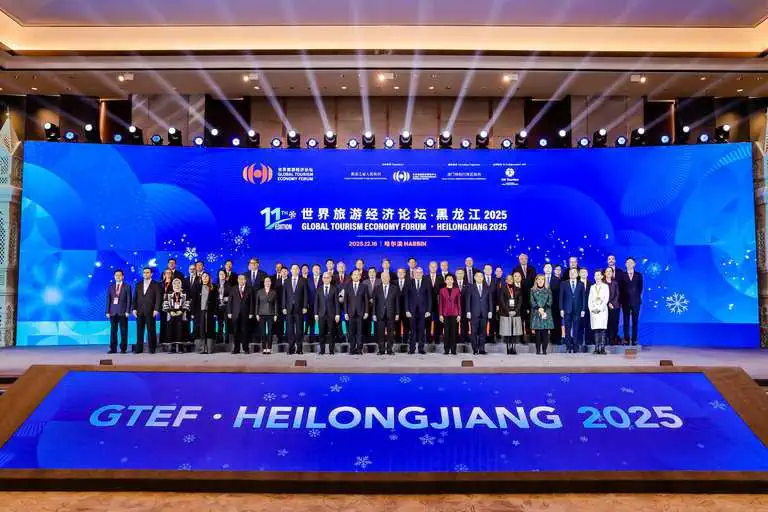
The 11th Global Tourism Economy Forum ends in Harbin, spotlighting innovation, ice-snow tourism and China’s expanding role in global tourism development
The 11th Global Tourism Economy Forum (GTEF) concluded successfully in Harbin, Heilongjiang Province, bringing together more than 1,500 global tourism leaders, policymakers and industry executives from over 30 countries and regions. Held under the theme “New Quality Productive Forces: Powering the Global Tourism Economy,” the Forum marked a pivotal moment as GTEF was hosted outside Macao for the first time, signalling a strategic expansion of China’s tourism dialogue onto a broader global stage. The event underscored why Heilongjiang — and Harbin in particular — matters as a rising hub for innovation-led, sustainable tourism development, especially in ice and snow tourism.
Travelers can find more information about Harbin and explore accommodation details on Trip.com and attrattions and tours on Trip.com
Disclosure: Some links in this article are affiliate booking links, which may earn me a small commission at no extra cost to you.
A Global Platform Moves North
Launched in 2012 in Macao, GTEF has evolved into one of the most influential international platforms for tourism exchange. The 2025 Harbin edition represented a geographic and strategic shift, aligning China’s northern regions more closely with global tourism value chains and innovation ecosystems.
The Forum was jointly organised by:
- The People’s Government of Heilongjiang Province
- The Global Tourism Economy Research Centre
- The Macao Special Administrative Region Government (Founding Organizer)
It was held in collaboration with UN Tourism, with execution support from the Department of Culture and Tourism of Heilongjiang Province and the Harbin Municipal People’s Government, and co-organised by the China Chamber of Tourism.
High-Level Participation Reflects Global Relevance
The opening ceremony drew senior representation from across government, international organisations and the private sector, highlighting the Forum’s global relevance.
Participants included:
- The Secretary-General and senior officials of UN Tourism
- Ministers and vice-ministers of culture and tourism from Zimbabwe, Brazil, Indonesia, Iran, Italy and Macao SAR
- Tourism authority leaders from France, Spain, Chile, Malaysia and other destinations
- Representatives from organisations such as WTTC, PATA, ETC, WTCF and WTA
- Officials from China’s central ministries and leaders from 14 Chinese provinces and municipalities
- C-suite executives from leading Chinese and international enterprises
- Domestic and international media
Opening Messages: Innovation, Openness and Quality Growth
The opening ceremony featured addresses from key leaders shaping the future of global tourism.
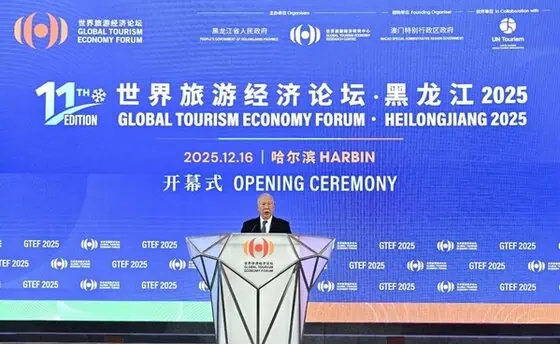
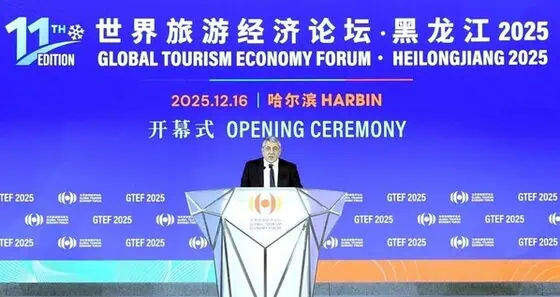
Edmund Ho Hau-wah, Vice Chairman of the National Committee of the CPPCC and Chairman of GTEF, described the move from Macao to Heilongjiang as a “visionary strategic upgrade,” aligning the Forum with China’s broader push to develop modern industrial systems and new quality productive forces.
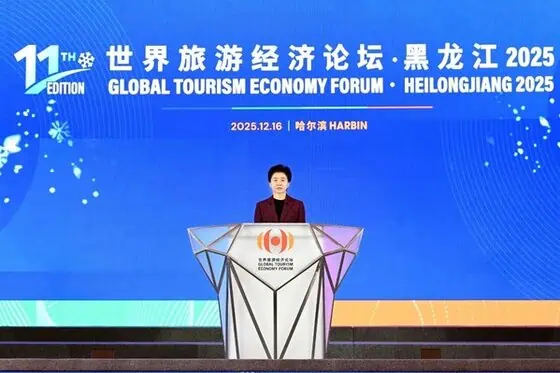
Xu Qin, Secretary of the Heilongjiang Provincial Committee of the Communist Party of China, highlighted Heilongjiang’s ecological assets, cultural depth and openness to international cooperation, positioning the province as a compelling destination for both domestic and global travellers.
Zurab Pololikashvili, Secretary-General of UN Tourism, called the Harbin edition a milestone, noting the city’s transformation and global appeal as a model of creativity and confidence in tourism development.
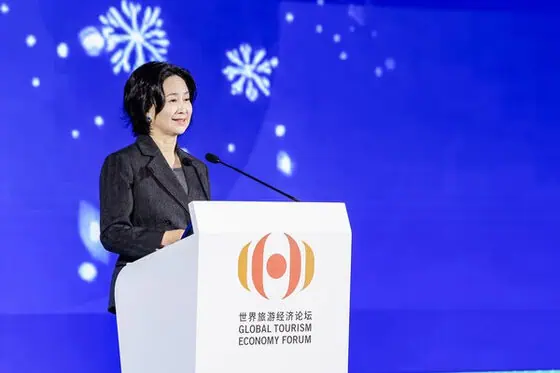
Macao’s Role and a “Twin Gateway” Vision
Speaking on behalf of the Macao SAR Government, Tai Kin Ip, Secretary for Economy and Finance and Executive Chairman of GTEF, emphasised Macao’s continued role as an international connector under its “One Centre, One Platform, One Base” positioning.
Pansy Ho, Vice Chairman and Secretary-General of GTEF, introduced the concept of a “twin gateway”, linking:
- Macao as a bridge between East and West
- Heilongjiang as a gateway to Northeast Asia
This structure aims to strengthen cross-border collaboration and deepen China’s integration into global tourism networks.
Ice and Snow Tourism Takes Centre Stage
A defining highlight of the Forum was UN Tourism’s recognition of Harbin for its global leadership in ice and snow tourism.
The city has gained international visibility through landmark attractions such as:
- Harbin Ice and Snow World
- Sun Island International Snow Sculpture Art Expo
By transforming its natural cold-weather assets into a thriving visitor economy, Harbin has become a benchmark for seasonal tourism innovation and cultural exchange.
Industry Perspectives on Global Tourism Trends
Industry leaders used the Forum to reflect on post-pandemic recovery and future growth.
Gloria Guevara, Interim President and CEO of the World Travel & Tourism Council (WTTC), pointed to China’s strong tourism momentum, citing its blend of cultural heritage, modern urban development, natural landscapes and infrastructure. Harbin, she noted, demonstrates how destination identity and natural resources can be elevated into globally competitive tourism products.
A Decade-Long Global Track Record
Since its inception, GTEF has:
- Hosted 10 previous editions
- Attracted over 14,000 participants
- Engaged stakeholders from more than 90 countries and regions
- Partnered with 44 countries and 13 Chinese provinces and cities
The Forum has played a consistent role in promoting tourism branding, policy dialogue and international cooperation, reinforcing its position as a bridge between China and the global tourism economy.
At a Glance
- Event: 11th Global Tourism Economy Forum (GTEF)
- Location: Harbin, Heilongjiang Province, China
- Theme: New Quality Productive Forces: Powering the Global Tourism Economy
- Participants: 1,500+ delegates from 30+ countries and regions
- Key Partner: UN Tourism
- Milestone: First GTEF held outside Macao
- Highlight: UN Tourism recognition of Harbin for ice and snow tourism
- Founded: 2012, Macao
Also read: Mekong Tourism Forum 2025 Concludes With a Milestone Tourism Framework
