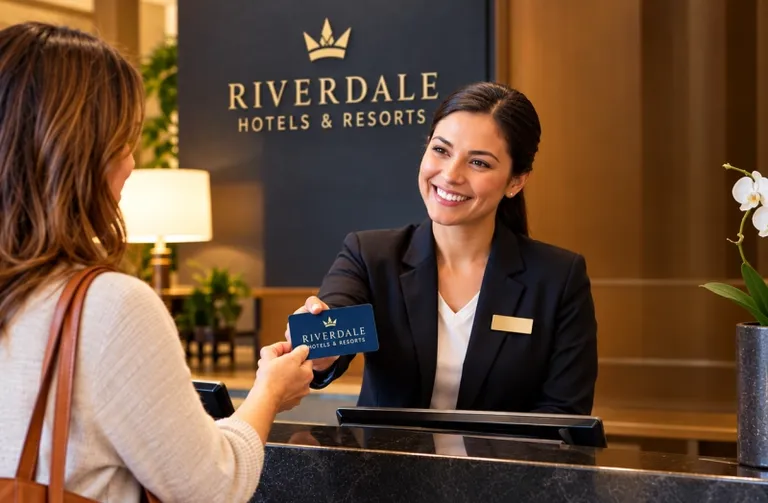
Experienced hoteliers have long understood that genuine hospitality and efficient guest service influence hotel revenue. Now, Hilton and Marriott are introducing financial incentives that link guest satisfaction directly to franchisee costs, giving hotel operators a more tangible reason to invest in service quality.
Until recently, hotels relied largely on guest satisfaction surveys and Net Promoter Scores (NPS) to assess the financial value of good service. Unlike direct sales and online marketing, where performance can be measured through established key performance indicators, the impact of guest experience on profitability has been harder to quantify.
That approach is beginning to change. At least two major hotel groups are introducing fee discounts and financial incentives for franchisees based on guests’ actual experiences.
Hilton and Marriott Introduce Guest Satisfaction Incentives
During Hilton’s second-quarter 2026 earnings call, CEO Chris Nassetta discussed RISE, a programme that offers fee discounts to hotels achieving strong guest satisfaction survey results.
The initiative is designed to encourage hotel leaders to train and motivate employees to deliver better guest service.
Marriott is introducing a similar initiative. During the company’s second-quarter earnings call, CEO Tony Capuano said:
“We are also now planning to roll out a new ITR, or Intent to Recommend incentive, in the U.S. and Canada that will provide a fee discount for top hotels that receive strong guest satisfaction scores.”
Later in the call, Jennifer Mason, EVP / CFO, provided further details:
“It’s up to 50 basis points of gross room revenue, fee reimbursement for achieving defined ITR thresholds. That will start to be baked in for the back half of the year.”
For franchisees, these programmes create a direct financial connection between guest satisfaction and hotel operating costs.
Hotel Loyalty Goes Beyond Points and Brand Names
To me, this is encouraging news for the hotel industry. I hope other major brands follow the same direction.
For too long, hotel groups have appeared to place much of their loyalty strategy on points-based programmes. Of course, points matter, particularly to frequent travellers like me, who spend almost as many days in hotels as they do at home.
However, most frequent travellers belong to multiple hotel loyalty programmes. They also have alternatives outside traditional hotel groups.
One example is Expedia’s OneKey Cash, which offers credits that can be used towards future bookings across its three platforms: Hotels.com, VRBO and Expedia.
Meanwhile, major hotel groups have continued introducing new brands to attract different customer segments and expand market share.
Yet many properties are beginning to feel remarkably similar, despite carrying different brand names.
This summer, my wife and I took several road trips across the Eastern United States. We stayed at Spark by Hilton, Holiday Inn Express and Fairfield Inn along the way.
Frankly, if someone had blindfolded me and walked me into the guest room or breakfast area, I doubt I could have identified which brand I was staying with.
Hotel Employees Remain the Biggest Differentiator
The new incentive programmes suggest that hotel groups are recognising something important: their people remain among their greatest assets.
These are the familiar faces who recognise returning guests and make an ordinary stay more personal.
I can readily recall several examples from our travels this summer:
- Residence Inn Lexington, Kentucky: A maintenance technician allowed my extended family to remain in the swimming pool beyond its 9 p.m. closing time in July because the children were enjoying themselves.
- Spark by Hilton at Roanoke Airport: A front-desk associate noticed that my 82-year-old mother-in-law was using a walker. Although we had booked a standard room and were assigned one at the end of a long hallway, the associate proactively offered an accessible room.
- Holiday Inn Express: A front-desk colleague showed empathy when we reported that our cat, Waldo, was missing. The colleague offered to ask other staff members to help search. Waldo was eventually found hiding behind the nightstand in our room.
These encounters are the kinds of experiences that guests remember.
Indeed, recent research points to the continuing importance of human interaction in hospitality.
According to the Hotels.com 2025 Hotel Room Innsights report, reported 12 months ago this month, 70% of hotel guests said they preferred in-person check-in and support.
Similarly, Expedia’s Path To Purchase report, published last year, found that conversations with family members were the largest source of inspiration during the initial travel-planning stage, cited by 37% of respondents. Another 17% identified conversations with co-workers or friends.
AI Cannot Replace the Human Connection
As artificial intelligence becomes more widely used, its misuse is also becoming more visible. AI-generated content and deepfakes are raising questions about the reliability of digital information.
Could this lead travellers to place even greater value on recommendations from people they know and trust?
For hoteliers, embracing technological innovation remains important. However, technology alone cannot provide a lasting competitive advantage. The same vendors selling expensive solutions to one hotel are likely marketing them to its competitors, too.
Instead, hotel operators should pay closer attention to the remaining human elements of the guest experience.
Technology will continue to automate more interactions. Consequently, every remaining opportunity for personal contact becomes more significant.
Technology companies often describe non-automated guest interactions as “friction points”. In hospitality, however, these should be viewed as “connection opportunities”.
A Financial Case for Better Hospitality
Independent hotels still have to rely largely on guest feedback and anecdotal evidence to assess how satisfaction scores and strong NPS performance affect profitability.
For Hilton and Marriott franchisees, however, the introduction of these incentive programmes could make that relationship more tangible.
As the programmes take effect, qualifying hotels should begin seeing the financial benefits reflected in their profit and loss statements.
Ultimately, technology can improve hotel operations, but it is the people delivering the service who often determine whether guests return. Hilton and Marriott’s latest initiatives offer a financial recognition of that principle.
Related Coverage
Hilton YOTEL Agreement Brings Tech-Forward Hotels to Key Cities Worldwide
IHG Reports Resilient Growth as Global Hotel Signings Strengthen Future Outlook
MGM Resorts Extends China Branding Agreement to 2032
Editorial disclosure: This article is an independently written editorial analysis based on industry reoprting from HNR Hotel News and insights from Doug Kennedy. The content has been rewritten and contextualised for editorial clarity and relevance.
