Disclosure: This article contains affiliate links. We may earn a commission at no extra cost to you.
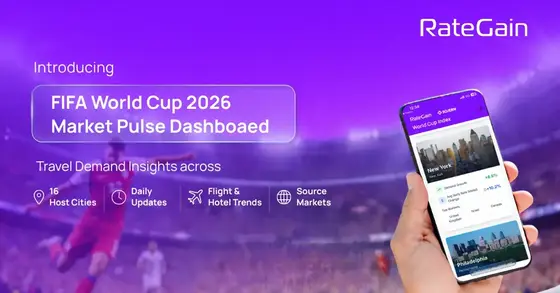
FIFA World Cup 2026 travel demand is showing signs of growth across host cities in North America, according to new data released by RateGain Travel Technologies Limited. The company has introduced a Market Pulse Dashboard that provides travel brands with real-time visibility into booking signals across all tournament host destinations.
The dashboard, powered by travel intent data from Sojern, tracks flight searches, confirmed bookings, and hotel demand ahead of the global football tournament. The platform is designed to help airlines, hotels, and tourism organizations respond quickly to emerging travel patterns.
Key Facts
- Brand: RateGain Travel Technologies – Market Pulse Dashboard
- Location: 16 FIFA World Cup 2026 host cities in the United States, Canada, and Mexico
- Update: Dashboard launched ahead of the 2026 tournament
- Scale: Tracks global flight and hotel booking demand signals
- Key feature: Real-time insights into FIFA World Cup 2026 travel demand
Key Takeaways
- Flight bookings increasing in several North American host cities
- Long-haul demand emerging from Europe and Asia
- Sports tourism expected to drive longer visitor stays
- Dashboard updates booking signals every 24 hours
- Travel brands can monitor evolving FIFA World Cup 2026 travel demand
What Is the FIFA World Cup 2026 Travel Demand Dashboard?
The FIFA World Cup 2026 travel demand dashboard is a real-time data platform developed by RateGain Travel Technologies Limited to track booking patterns ahead of the tournament.
Using travel intent data from Sojern, the platform provides visibility into flight bookings, hotel demand, and source markets. Travel brands can monitor how FIFA World Cup 2026 travel demand is evolving across different destinations.
The dashboard updates every 24 hours and provides insights designed for travel marketers, revenue managers, and destination marketing organizations.
Which Cities Are Seeing the Strongest Travel Demand?
Year-over-year flight booking data shows strong growth across several host destinations.
In the United States, Dallas (+42%), Houston (+38%), and Kansas City (+27%) are seeing some of the fastest increases in flight bookings. Other cities including Miami/Fort Lauderdale (+15%), Boston (+17%), and Philadelphia (+16%) are also reporting steady growth.
Mexico’s Monterrey leads the region with a 67% increase in bookings, while Canadian host cities Toronto (+12%) and Vancouver (+8%) are recording consistent gains.
Airport Transfers
For a smoother arrival experience, many travellers choose to pre-book airport transfers before departure. This allows you to lock in a fixed price and avoid taxi queues at the airport, making it a convenient option for travellers arriving late at night or visiting a destination for the first time.
Who Is Booking Travel for the World Cup?
The United Kingdom is currently the largest international source market for flights into U.S. host cities, accounting for about 19.5% of international bookings.
Canada represents another major source market with approximately 18.4% of bookings. Strong travel signals are also emerging from Asia, including South Korea and Japan.
Latin America presents additional potential demand. Argentina accounts for only 1.3% of confirmed bookings but represents 8.2% of flight searches, indicating strong interest that has not yet converted into reservations.
Why Is FIFA World Cup 2026 Travel Demand Rising?
The upcoming FIFA World Cup 2026 will be the first edition of the tournament hosted across three countries and 16 cities. Large-scale sporting events often generate significant travel demand as fans plan trips around match schedules.
Current booking data shows that around 65% of travelers are planning trips lasting six to twelve days or longer. This pattern suggests the tournament may generate extended tourism stays across host destinations.
Nearly half of travelers booking flights to World Cup destinations are traveling solo. This segment often books closer to departure, meaning FIFA World Cup 2026 travel demand could continue to rise as the tournament approaches.
Industry Insight: Sports Tourism Driving Long-Haul Travel
Mega-events such as the FIFA World Cup 2026 are increasingly influencing global travel patterns. The three-country hosting model could spread visitor flows more widely across North America compared with previous tournaments.
For airlines, hotels, and destination marketing organizations, access to real-time insights into FIFA World Cup 2026 travel demand allows quicker adjustments to pricing, marketing campaigns, and inventory planning.
Frequent international travellers passing through major hubs often rely on airport lounge access programs to make long layovers more comfortable. One commonly used option is Priority Pass, which provides access to a global network of airport lounges and travel experiences across multiple regions.
Booking Options
Travelers planning trips to World Cup host cities can compare flights, hotels, and travel experiences through major booking platforms including:
• Booking.com
• Agoda
• Trip.com
• Expedia
• Klook
Travel Tools
Frequent travellers often rely on practical travel gear and booking tools to make trips smoother and more efficient. Explore our curated list of travel tools we recommend, including luggage, accessories, and useful travel products frequently used on our trip.
Book Tours and Experiences
Travellers visiting different destinations can pre-book activities and guided tours through GetYourGuide, which offers sightseeing tours, museum tickets, and local experiences in cities worldwide.
Related Travel Coverage
Travellers interested in air travel may enjoy reading:
United Airlines Heathrow Marks 35 Years of Transatlantic Flights
London, Tokyo and Paris Lead Global Air Travel Demand in 2025
