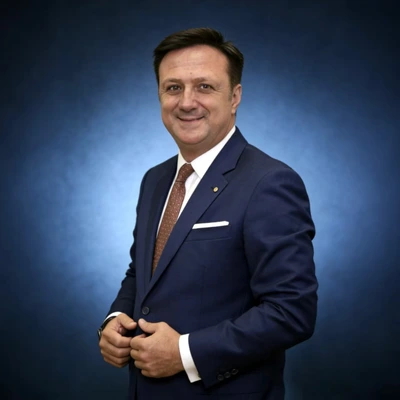
As Wuhan’s luxury hotel landscape enters a new era of competition, Fuat Koroglu, General Manager of InterContinental Wuhan, believes the key to staying ahead is not simply managing a hotel, but understanding the people behind it.
From challenging his own convictions and embracing situational leadership to using AI, developing young talent and building genuine connections with guests, his approach is grounded in one principle: getting it right together.
In this interview, Koroglu shares his career lessons, vision for InterContinental Wuhan, thoughts on the future of luxury hospitality, and why hotel leaders should stop managing the hotel and start managing the experience.
1. What is your role at InterContinental Wuhan?
General Manager of InterContinental Wuhan, Holiday Inn & Suites Wuhan International Expo, and Wuhan International Expo Convention Center.
2. Looking back, what moments have most influenced your career?
That failure influenced me more than any success because it taught me that my own conviction can actually be my blind spot. So today, I actively tell my team, “Do not give me alignment too early.” I ask them to poke holes in my plan before we commit. But the rule is: once we make the call, we all row in the same direction. It’s not about being right; it’s about getting it right together.
3. What drew you to this property?
I can answer this with a three-pillar framework:
The business reason: The P&L and market opportunity. The property has a unique position in the market, with untapped potential and challenges that I am excited to solve.
The people reason: The team, IHG culture, ownership and the existing team.
The personal reason: I felt a connection between the property’s identity and my personal leadership style and past experiences.
4. What is your vision for the hotel over the next few years?
Wuhan’s luxury hotel market is at an inflection point. The Ritz-Carlton opened in late 2025, Four Seasons has signed a deal, and JW Marriott is in the pipeline. The market is moving from a “luxury desert” to intense multi-brand competition.
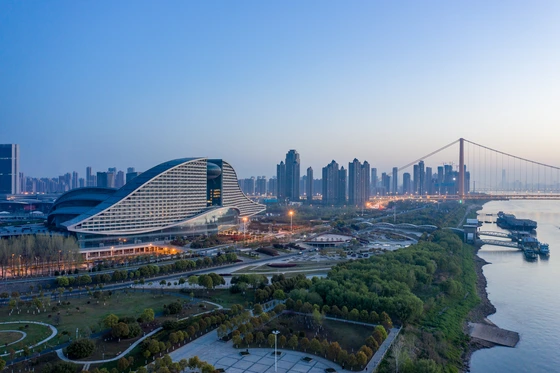
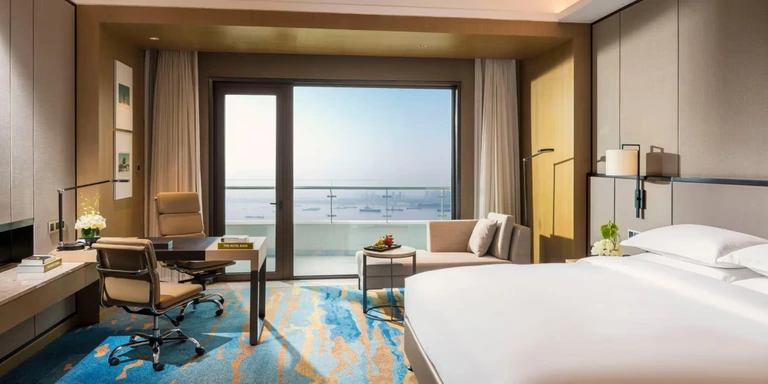
InterContinental Wuhan is a flagship asset. Opened in 2016, it was the first InterContinental in Central China, with 485 rooms starting at 55 square metres, including spacious balconies. The hotel is also located next to Wuhan International Expo Center and the Yangtze River.
InterContinental Wuhan should strategically position itself as the “proven, reliable luxury alternative” to new entrants. The ultimate goal is to achieve consistent RevPAR and GOP growth by anchoring the Hanyang riverfront luxury segment.
5. How has luxury hospitality changed since you first joined the industry?
Traditional luxury was limited, creatively driven by designers, consistent, tailor-made, unique and difficult to access. Today, luxury is being redefined through technology, social media and experiences. It is more about feelings than goods, and more about experiences than representation.
6. What leadership principles guide your daily decisions?
I don’t have just one type of leadership in my daily work. It is more about situational leadership.
7. How do you build a culture of excellence among your team?
Through lots of guidance and best practices, sharing results, and coming together to enjoy good moments or support each other through difficult moments. That helps us build consistency. The combination of how we do our daily work is what becomes our culture.
8. Staff retention has become increasingly challenging. How do you attract and retain talent?
I would say it is 50% IHG. The IHG brand provides great platforms for young people to develop themselves. The other 50% is my team, their team spirit and our culture.
We have many universities in Wuhan, and we connect with most of them. We communicate and share experiences frequently, which helps us attract and motivate young talent. Many of our trainees want to stay with us after completing their training, and that is a great ratio.
9. What skills do you believe future hotel leaders will need?
They need to be able to use technology. I believe AI will not take human jobs; however, those who can use AI better will take the jobs. Future leaders also need to be able to translate technology into human feelings and remain flexible and adaptable to fast changes.
10. How do you balance operational excellence with delivering genuine hospitality?
IHG brand standards are based on genuine hospitality, but the reality of hospitality is more about emotional connection. Personally, I always use empathy to understand each guest. Every person is different, so before making any judgment or taking any action, we need to understand the individual and create that sense of empathy.
11. How important is technology in today’s guest experience?
Guest experience is the key. However, the importance of technology from person to person is related to each individual’s ability to use and understand it.
The younger generation is more adapted to technology. However, purchasing power is still higher among middle-aged and older guests. Therefore, I believe technology will become even more important in the future.
12. What role does sustainability play in your business strategy?
For me, sustainability is not a CSR checkbox—it’s an operational efficiency driver and a competitive advantage. When done right, it reduces costs, increases guest loyalty and future-proofs the asset for ownership.
If you frame it around four pillars—cost efficiency, guest experience and revenue, asset protection and ROI, and talent and culture—then sustainability will naturally follow. If these four pillars are managed well, sustainability will come.
13. How do online reviews influence hotel operations?
They are a great tool for checks and balances. We use them quite often to understand customer behaviour and identify opportunities for future development.
14. Could you share an example of a difficult operational challenge and how your team overcame it?
Whatever the challenge—financial or operational, short-term or mid-term, no matter what it is—we always act as one team and build mutual trust.
Every team member must feel a sense of belonging and importance. They should have clear guidance and clear goals about what to do and how to do it.
15. Which hotel KPIs do you pay the closest attention to?
I pay attention to all of them because each KPI does not always have the same stakeholder. Of course, financial KPIs and quality KPIs are priorities. However, employee satisfaction surveys are also important because they help us understand the team spirit.
16. What opportunities excite you most about the future of hospitality?
The hotel industry is one of the most global industries. You can basically work anywhere in the world because the basic rules are more or less the same. This gives hoteliers great freedom to travel around the world and learn about different cultures.
17. If someone has never stayed at your hotel before, why should they choose it?
In Wuhan, we have some of the most spacious rooms and public areas. These days, space is a luxury. Look at cars—more and more people are choosing SUVs.
Second, you have access to fresh air in your room and great views from the balcony. If you are holding an event, we also have very large meeting facilities for all kinds of meetings and events.
18. What local experiences should every visitor enjoy during their stay?
You can experience waking up and watching the majestic Yangtze River. We also have a local gift shop where you can find Wuhan cultural handicrafts.
And our reganmian is one of the best local dishes—the famous hot dry noodles of Wuhan.
19. What advice would you give to aspiring hotel general managers?
Stop managing the hotel and start managing the experience.
Hotels are not about beds, bathrooms and buffets. Hotels are about transitions. Guests arrive tired, disoriented and far from home. They are celebrating anniversaries, grieving losses, closing business deals or starting adventures.
Your job is to be the steady hand that guides them through that transition. Every time you walk through that lobby, remind yourself: “I am not a manager. I am a memory-maker.”
If you keep that at your core, the numbers, the audits and the promotions will all follow.
20. What continues to motivate you after so many years in hospitality?
If I am being brutally honest, I am also motivated by self-discipline. There are mornings when I am tired. There are owners who are difficult. There are audits that make me want to scream.
But I have learned that motivation is a fleeting emotion; discipline is a muscle. I show up not because I feel like it, but because 500 families depend on my payroll running correctly, and 1,000 guests depend on my building being safe.
That weight—that profound, humbling responsibility—is not a burden. It is my anchor. It motivates me because it matters.
In a world of ephemeral digital transactions, a hotel is a sacred, physical space where real human lives pause, connect and heal. To be the guardian of that space? I can’t imagine a more motivating way to spend a life.
I love this job. 😊
Rapid Fire
Early check-in or late check-out? Both.
Favourite city in the world? Istanbul.
Mountains or ocean? Ocean.
Business travel or leisure travel? Both.
Your favourite hotel breakfast? Weekdays: a quick continental breakfast or something simple and local. Weekends: a long brunch.
Favourite airline? THY (Turkish Airlines).
One leadership book everyone should read? I prefer biographies rather than books on leadership philosophy. The biography of any successful person shows real experience.
Best career advice you’ve received? Continue to grow through experience, learning and practice. Focus on your career, not money. The money will follow.
One word that describes your hotel? Landmark.
One word that describes yourself? Hotelier.
Related Coverage
Read our full collection of travel interviews with industry leaders and hospitality experts.
