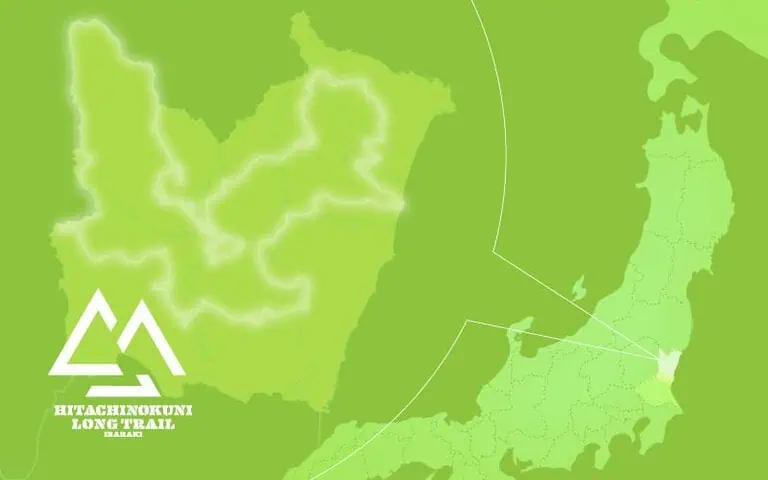
The Hitachi-no-kuni Long Trail in northern Ibaraki Prefecture has fully opened as an approximately 350-kilometer route connecting six cities and towns.
With its full opening, the Hitachi-no-kuni Long Trail is described as Japan’s longest long trail designed as a loop route.
The trail connects forests and satoyama landscapes with valleys, coastlines and historic cultural heritage sites. Rather than focusing only on reaching a particular destination, the route is designed around the experience of walking through the region.
Along the way, travelers can encounter local landscapes, history, communities, food and culture. The trail provides a way to explore different parts of Ibaraki on foot.
A Different Way to Travel Around Japan
Unlike mountain climbing, where reaching a summit is generally the main objective, a long trail makes the journey itself part of the experience.
The Hitachi-no-kuni Long Trail combines hiking and mountain routes with paths through satoyama landscapes, agricultural areas and local communities. Travelers can therefore move between natural scenery and places shaped by everyday life.
The route includes forests and valleys as well as countryside and coastal areas. Each section offers a different setting and perspective on the communities along the trail.
Japan already has a long tradition of travel on foot. Examples include the Kumano Kodo pilgrimage routes and the Shikoku pilgrimage.
In recent years, growing interest in health, well-being and time spent in nature has also brought greater attention to long trails as a form of travel.
A 350-Kilometer Route Through Northern Ibaraki
The Hitachi-no-kuni Long Trail connects natural landscapes, food, historical and cultural heritage and other regional attractions across northern Ibaraki through hiking trails and other paths.
Its concept is “an extraordinary journey of repeatedly walking through mountains and rural landscapes while experiencing both everyday life and the extraordinary.”
A key feature of the route is its combination of natural surroundings with satoyama landscapes, local culture and the lives of people in the communities along the way.
The trail passes through forests and valleys, but also through communities, fields and historic sites. Coastal sections add another landscape, shaped by both the sea and generations of human activity.
The trail is also accessible from the Tokyo metropolitan area. Travelers do not need to complete all 350 kilometers in one trip.
Instead, visitors can choose section hikes or day hikes according to their fitness level, interests and itinerary.
This allows travelers to approach the route as either a longer journey or a shorter walking experience.
Slow Travel Through Ibaraki
The trail is also positioned as a way to experience Ibaraki at a slower pace.
Rather than trying to visit a large number of attractions in a short period, travelers can walk, speak with local residents, make something, try regional food and spend time in nature.
These experiences offer opportunities to learn more about the culture and everyday life of the areas along the route.
The full opening of the Hitachi-no-kuni Long Trail creates another option for slow travel in Ibaraki, centered on spending more time in a destination rather than moving quickly between attractions.
Ibaraki is located about one to two hours from Tokyo, according to the supplied information, and combines a range of landscapes and cultural experiences.
These include space exploration, mythology and prayer, traditional crafts, fermentation culture and satoyama landscapes where communities continue to live alongside nature.
The trail is therefore one way to experience the prefecture, while other attractions can be explored according to each traveler’s interests.
With the full opening of the Hitachi-no-kuni Long Trail, Ibaraki is presenting the route as a starting point for exploring the prefecture’s different landscapes, communities, food and cultural heritage.
Related Coverage
Ngaro Track Walk In Comfort Opens for Bookings in Queensland
Expedia Expands Beyond Booking With CLEAR, Uber and New AI Travel Tools
