Langham Hospitality Group (LHG) has strengthened its commitment to resource efficiency and circularity across its hotel portfolio. Each property has introduced creative solutions to minimise food waste while enhancing the guest experience.
LHG Sustainability Programme
As part of its ongoing sustainability mission, LHG has invited its culinary and bar teams to develop unique food and beverage creations that tackle location-specific excess. The initiative supports more responsible kitchen practices by maximising ingredient use without compromising quality, flavour or enjoyment.
“Sustainability becomes most meaningful when it is embedded into the everyday decisions we make, including how we source, prepare and serve food. This programme reflects how our teams are translating broader sustainability commitments into practical action, finding thoughtful ways to respect the ingredients we work with whilst enhancing the guest experience,” said LHG CEO Bob van den Oord.
Highlights from Across the Portfolio
At Cordis, Auckland, the team has found an innovative use for the peels and pulp generated by its popular fresh orange juicer. Instead of discarding them, the hotel transforms the leftovers into a marmalade compote that adds a zesty touch to breakfast yoghurt dishes. As a result, approximately 390kg of orange peels and pulp are diverted from landfill each year.
Meanwhile, The Langham, Jakarta has enhanced its breakfast offerings at Tom’s by Tom Aikens with Signature Homemade Sausage and Smoked Beef Brisket Sausage. Both are crafted from freshly ground cuts of high-quality meat, turning excess ingredients into a signature morning favourite.
Similarly, The Langham, Boston serves its Coastal Catch Burger using fresh cod and salmon trimmings from premium menu portions at The Fed. The popular burger helps utilise up to 220kg of fresh fish annually that might otherwise go to waste.
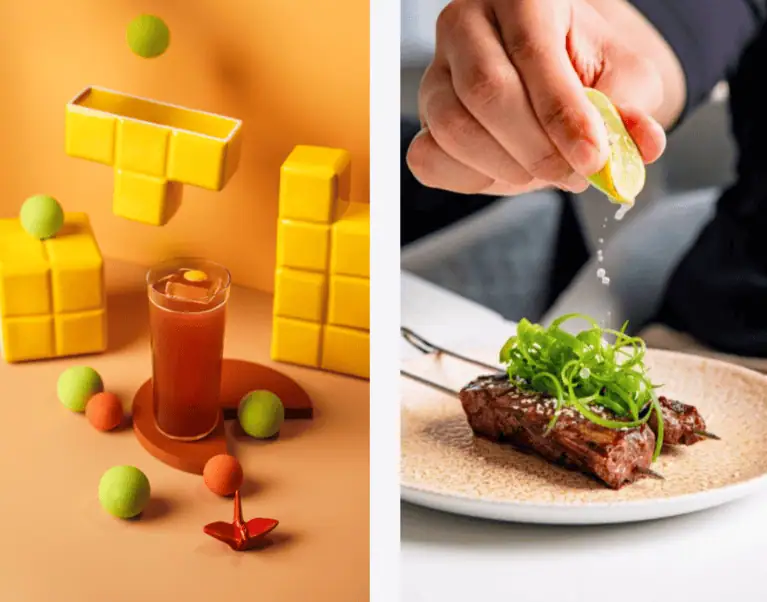
At The Langham, Gold Coast, premium Wagyu beef trimmings from Akoya Kitchen are repurposed into Kushiyaki Wagyu Beef Skewers served at Palm Court. In addition, the culinary team renders Wagyu fat in-house to create its own Wagyu tallow, ensuring every part of the ingredient is used. Meanwhile, the hotel’s lively lobby bar creates house infusions from near-overripe fruit and surplus citrus peels to elevate its cocktail programme.
Likewise, Eaton HK gives food by-products a second life at its Terrible Baby terrace bar through two inventive cocktails. The Monkey Business cocktail uses excess citrus peel to infuse Lillet, producing a fragrant martini-style drink. Meanwhile, the Dong Ling Cha cocktail upcycles coffee grounds left over from Espresso Martinis to infuse Matusalem rum.
As hotel teams continue to experiment and exchange ideas across the portfolio, even more innovative applications are expected to emerge. Consequently, the initiative will further strengthen LHG’s commitment to circular kitchen practices and reducing food waste.
The upcycling programme follows several major sustainability milestones for the group. Earlier this year, The Langham, Huntington, Pasadena achieved EarthCheck Master Certification, the highest distinction within the globally recognised scientific benchmarking and certification programme. The achievement reflects 15 years of continuous commitment to sustainability and environmental stewardship.
With this latest recognition, The Langham, Huntington, Pasadena joins five other LHG hotels that have also reached EarthCheck Master status: Cordis, Auckland, Cordis, Hong Kong, Eaton HK, The Langham, Hong Kong, and The Langham, London. Altogether, the group now has 18 EarthCheck-certified properties, reinforcing its long-term commitment to sustainable hospitality.
Related Coverage
T’ang Court Langham Shanghai Michelin Stars Rise to Two in 2026 Guide
