This article contains affiliate links. We may earn a commission at no extra cost to you.
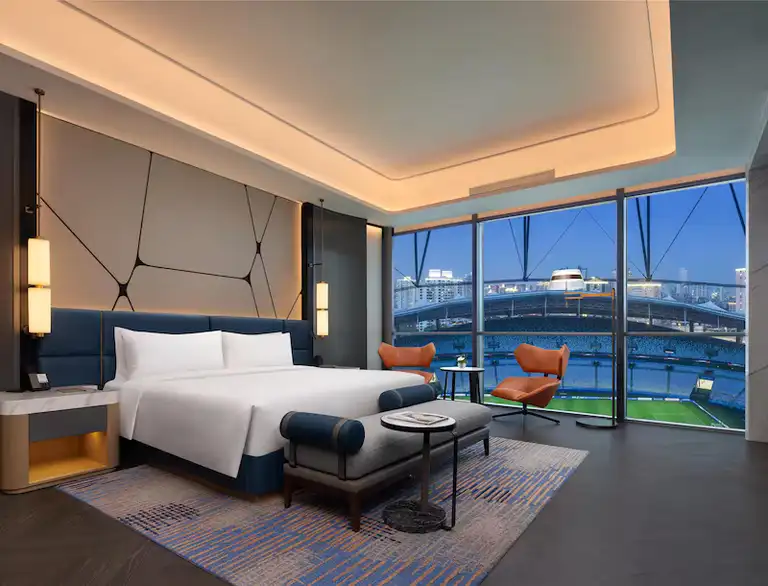
Shanghai’s growing reputation as a global sports and events destination is reshaping its hotel landscape, and the opening of Radisson Blu Hotel, Shanghai Stadium reflects that shift directly. Located inside Shanghai Stadium in Xujiahui Sports Park, the new upper-upscale hotel combines event-driven hospitality with wellness-focused facilities and front-row stadium views.
The opening also highlights how international hotel brands are increasingly targeting mixed-use sports and entertainment districts in major Asian cities. For travelers, it introduces a new accommodation option designed around concerts, sporting events, business gatherings, and urban lifestyle experiences.
Key Facts
- Hotel: Radisson Blu Hotel, Shanghai Stadium
- Brand: Radisson Blu
- Location: Xujiahui Sports Park
- Opening: Grand opening announced in 2026
- Room Count: 208 rooms and suites
- Highlight: Stadium-view guestrooms inside Shanghai Stadium
Key Takeaways
- Shanghai gains a hotel integrated directly into a major sports venue.
- Stadium-facing rooms create a rare live-event hospitality experience.
- Wellness amenities reflect rising demand for fitness-focused travel.
- Radisson Blu expands further across the Yangtze River Delta region.
- Event-driven tourism continues influencing hotel development strategies.
What is the new Radisson Blu Hotel, Shanghai Stadium?
Radisson Blu Hotel, Shanghai Stadium occupies floors six through 12 of Shanghai Stadium and introduces 208 guestrooms and suites to one of Shanghai’s busiest lifestyle and sports districts.
The property is positioned within Xujiahui Sports Park, an urban complex combining sports venues, leisure spaces, and cultural attractions. The location places guests close to concerts, sporting events, shopping districts, and historic sites including Longhua Temple and Wukang Road.
Rather than functioning as a conventional city hotel, the property is designed around the rhythm of large-scale events and urban entertainment activity. That positioning reflects a wider hospitality trend emerging across major Asian gateway cities.
Why does this matter for travelers?
For travelers attending concerts, tournaments, or business events, the hotel’s biggest differentiator is its stadium-facing accommodation. Select rooms overlook the venue directly, offering guests a viewing experience rarely seen in traditional urban hotels.
The property also targets wellness-conscious travelers through facilities that include a hyperbaric oxygen chamber, a fully transparent temperature-controlled swimming pool, and a modern fitness center. This aligns with increasing demand for hotels that combine accommodation with lifestyle and recovery-focused experiences.
Its location near key transport connections also makes it attractive for international visitors exploring central Shanghai without relying heavily on long commutes.
Built for meetings, events, and celebrations
Business and events remain a major focus of the development. The hotel includes nearly 1,000 square meters of meeting and event facilities, including the Olympia Ballroom and six multifunction meeting rooms.
Shanghai continues to compete aggressively for conferences, exhibitions, and international corporate events. Hotels connected to entertainment and sports infrastructure are becoming increasingly valuable as organizers seek integrated venue ecosystems rather than standalone convention properties.
This opening positions Radisson Blu to capture demand from both the meetings industry and Shanghai’s expanding calendar of live entertainment events.
Dining concepts focus on local and social experiences
The hotel’s food and beverage strategy combines international dining with regional Chinese culinary influences.
94 Kitchen serves international all-day dining alongside Shanghai-inspired breakfast offerings. JIU·LI blends Huaiyang and Cantonese cuisine, while JIU·BAR focuses on cocktails, wines, and social viewing experiences through its large LED screen setup.
The emphasis on social dining spaces mirrors broader hospitality trends in China, where hotels increasingly use restaurants and bars to attract both guests and local residents.
How does it impact the travel industry?
The opening reinforces Shanghai’s growing importance as a sports tourism and entertainment travel hub. International hotel brands are increasingly integrating properties into stadiums, mixed-use complexes, and event districts to diversify demand beyond traditional business travel.
For hotel operators, this model creates stronger year-round occupancy opportunities tied to concerts, sporting events, exhibitions, and wellness tourism. For travelers, it delivers more experience-oriented stays connected directly to destination activities.
The project also strengthens Radisson Hotel Group’s presence in eastern China as competition intensifies among global hotel groups expanding in the region.
About the Destination
Shanghai remains one of Asia’s most influential travel and business destinations, attracting visitors through its mix of finance, culture, luxury retail, and entertainment. Areas such as Xujiahui are increasingly evolving into integrated lifestyle districts that combine tourism, sports, retail, and hospitality.
The city’s post-pandemic tourism recovery has also accelerated demand for experiential urban stays linked to concerts, events, and wellness-driven travel.
Industry Insight
Sports tourism is becoming one of the fastest-growing segments in urban hospitality development. Hotels connected directly to stadiums and entertainment complexes allow operators to capture high-spending event audiences while reducing reliance on traditional corporate travel demand.
The opening of Radisson Blu Hotel, Shanghai Stadium also reflects how hotel brands are adapting properties around lifestyle ecosystems rather than standalone accommodation models. Travelers increasingly expect hotels to function as part of the destination experience itself.
Check Availability
Travelers planning a stay at Radisson Blu Hotel, Shanghai Stadium should compare rates across major booking platforms including Booking.com, Trip.com, Agoda, Expedia, and Klook for the best available deals and package options.
Travel Tools
Travelers can also explore useful travel essentials and exclusive reader offers through Travel Recommended Products.
This bracelets and jewelry with a timeless design from Daniel Wellingotn is also featured in our curated travel gear recommendations for frequent travelers.

Related Coverage
Travelers interested in this story may also enjoy:
Radisson Blu Opens Flagship Hotel in Nanjing South New Town
Radisson Blu Hoi On, 3rd Radisson Blu Property in Vietnam, Opens
Shanghai luxury hotel opening: Andaz Shanghai ITC debuts in Xujiahui on 3 February 2026
Shanghai Inbound Tourism 2025 Rebounds to 9.36 Million Visitors, Five-Star Hotels Lead Growth
Aloft Shanghai Hongqiao: A Fresh, Stylish Stay in the Heart of West Hongqiao
New Hyatt Hotels Open in Shanghai Lingang: A New Hub for Business & Leisure
Waldorf Astoria Shanghai Qiantan: A New Era of Luxury in Pudong
Wolfgang Puck’s Spago Shanghai Grand Opening Sets a New Benchmark for Bund Dining
