This article contains affiliate links. We may earn a commission at no extra cost to you.
International travelers heading to China may soon face fewer payment barriers as Tencent launches a major inbound payment upgrade tied to APEC 2026 preparations in Shenzhen. The initiative reflects China’s broader push to make its dominant QR-code payment ecosystem more accessible to overseas visitors at a time when inbound tourism and business travel are recovering steadily.
Tencent announced new partnerships, fee waivers, and multilingual traveler support services designed to simplify how foreign visitors use Weixin Pay across China. The upgrades arrive as Shenzhen positions itself as a global gateway city ahead of APEC 2026.
Key Facts
- Company: Tencent / TenPay Global / PayPal World
- Location: Shenzhen, China
- Announcement Date: May 2026
- Event: Shenzhen International Financial Expo
- Key Development: PayPal users will gain access to Weixin Pay QR payments in China
- Initial Market: United States-based PayPal users
- Traveler Benefit: 90-day international card fee waiver
- Languages Supported: 16 languages across payment guidance services
Key Takeaways
- China is easing digital payment access for international visitors.
- PayPal users will soon pay directly at Weixin Pay merchants nationwide.
- Shenzhen is positioning itself as a global travel and fintech gateway.
- Tencent is expanding multilingual support ahead of APEC 2026.
- QR-code payment interoperability is becoming a major tourism trend.
What Is Tencent’s New Inbound Payment Initiative?
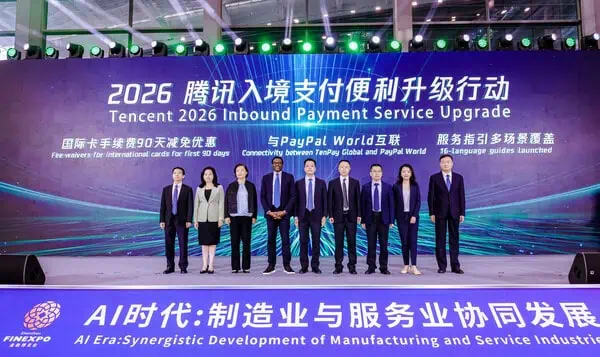
Tencent unveiled its “2026 Inbound Payment Service Upgrade Initiative” during the opening forum of the 20th Shenzhen International Financial Expo. The program was launched alongside the Shenzhen Municipal Financial Regulatory Bureau, the People’s Bank of China Shenzhen Branch, and PayPal World.
The initiative focuses on three major areas: payment product upgrades, international wallet connectivity, and multilingual traveler services. Together, the measures aim to reduce one of the biggest friction points for foreign travelers in China — accessing local digital payment systems.
China’s mobile-first payment ecosystem has long created challenges for overseas visitors unfamiliar with local QR-code platforms. International tourists have often relied heavily on cash or international bank cards, even as domestic travelers increasingly use mobile wallets almost exclusively.
Tencent’s latest move signals a broader shift toward making China’s payment infrastructure more globally compatible as the country seeks to attract more inbound tourism, business events, and international conferences.
PayPal Users Will Soon Pay Through Weixin Pay QR Codes
One of the most significant developments is the partnership between TenPay Global and PayPal World. The collaboration will allow PayPal users to pay at tens of millions of Weixin Pay merchants across China by scanning QR codes.
The rollout will initially launch for U.S.-based PayPal users before expanding to additional markets in phases.
For travelers, the change could simplify everyday spending across restaurants, hotels, retail stores, transport hubs, and tourist attractions. Instead of navigating unfamiliar local payment setups, visitors will be able to use a digital wallet they already recognize.
Tencent said Weixin Pay has already partnered with more than 40 overseas wallet institutions through China’s unified cross-border QR-code gateway.
The expansion reflects a growing global travel trend where destinations increasingly prioritize payment interoperability to attract international visitors. Similar developments are emerging across Southeast Asia, the Middle East, and Europe as tourism boards and fintech firms compete to reduce traveler friction.
Why Does This Matter for Travelers Visiting China?
Digital payments are now deeply embedded in daily life across China. Many businesses, particularly smaller merchants, rely heavily on QR-code payments instead of traditional card terminals.
For some international visitors, this has created practical challenges ranging from transportation payments to food ordering and retail purchases.
Tencent is also introducing a 90-day waiver on international card processing fees for first-time users linking foreign bank cards to WeChat. The waiver applies to daily spending up to RMB 1,000.
The company said transactions by foreign travelers using Weixin Pay linked to international bank cards increased by nearly 80% year-on-year between January and April this year.
That growth suggests inbound travelers are becoming more comfortable with local mobile payment ecosystems as China gradually reopens and international travel demand rebounds.
Shenzhen Expands Multilingual Payment Services Before APEC 2026
Shenzhen is using APEC 2026 preparations to strengthen its position as one of China’s most internationally connected cities.
Tencent announced that Weixin Pay will expand in-app payment guidance to 16 languages, including English, Korean, Thai, Russian, Spanish, and Arabic. The language coverage is designed to support travelers arriving from major APEC economies.
The company is also deploying offline traveler support desks at airports, ports of entry, hotels, commercial districts, and transportation hubs. These services will be supplemented by 24-hour multilingual online support.
The broader strategy reflects how major international events increasingly accelerate infrastructure upgrades in host destinations. Payment accessibility, language support, and digital convenience are becoming as important as airport capacity and hotel supply in shaping visitor experiences.
What Trend Does This Reflect in Global Travel?
Tencent’s initiative highlights the growing convergence between travel, fintech, and tourism strategy.
Destinations are increasingly recognizing that seamless payments influence traveler satisfaction, spending behavior, and destination competitiveness. In many markets, payment convenience now directly affects how easily visitors navigate transport systems, attractions, shopping districts, and hospitality services.
China’s push to improve inbound payment accessibility also aligns with a wider tourism recovery strategy focused on restoring international business travel, events, and leisure demand.
The integration of overseas wallets into local QR ecosystems may become increasingly common as travel resumes across Asia-Pacific markets.
About the Destination
Shenzhen has become one of China’s fastest-growing international business and technology hubs. Located adjacent to Hong Kong, the city plays a major role in cross-border trade, innovation, aviation connectivity, and financial technology development.
The city is also expanding its profile as a conference and business travel destination ahead of APEC 2026. Increased international air connectivity, hotel growth, and digital infrastructure investments are strengthening Shenzhen’s appeal to global visitors.
Industry Insight
Tencent’s latest payment initiative reflects how fintech infrastructure is becoming part of destination competitiveness in global tourism. Seamless payment access is increasingly viewed as essential for inbound visitor growth, especially in digitally advanced markets such as China.
For travelers, simplified QR-code access could reduce one of the biggest barriers to independent travel in China. For the broader travel industry, the partnership signals rising collaboration between global payment providers and domestic digital ecosystems as destinations compete for international tourism recovery.
Check Availability and Travel Tools
Travelers planning trips to China can compare hotel rates, flights, and local experiences across platforms:
- Compare hotel prices on Trip.com
- Book hotels on Booking.com
- Find hotel deals on Agoda
- Search hotel deals on Expedia
- Explore tours and travel experiences on Klook
Frequent travellers often rely on a variety of travel accessories and digital tools when planning trips. You can explore a curated list of travel tools we recommend and useful travel products for frequent travellers here.
This bamboo toothbrush, B-Corp certified, Oral-B and Sonicare compatible electric toothbrush heads from Truthbrush is also featured in our curated travel gear recommendations for frequent travelers.

Travelers Interested in This Story May Also Enjoy:
Trip.com Group and Visa Partner to Launch Virtual Travel Card Program for Global Travel Payments
Mastercard Backs Qlub to Redefine Dining Payments Across the GCC
Radisson Hotel Group Elevates Global Hospitality with One Powerful Payment Platform
Vietnamese Users Can Link UnionPay Cards to Alipay and WeChat Pay for Convenient Payments in China
JCB Launched Contactless Subway Payment Services in Shanghai and Beijing
Hilton is Streamlining Business Travel Payments by Making it Easier to Go Cardless
Visa Destinations Expands to Thailand, Targets Asia Travel Shift
12Go ChatGPT App Launch Expands Asia Transport Booking Access
Klook Launches Real-Time Rail Booking in Korea with KORAIL for Seamless Travel
