Xiaohongshu and Hong Kong hotel leaders are reshaping hospitality marketing through content-led travel discovery, targeting rising independent travellers and conversion-driven digital funnels.
At a Glance
- Seminar co-hosted by Xiaohongshu and the Federation of Hong Kong Hotel Owners
- Focus: sustainable hotel growth and content-driven booking conversion
- Over 400M monthly active users on Xiaohongshu, with strong travel intent
- 74.5% of Hong Kong hotel guests are independent travellers (HKTB data)
- Strategy centres on “browsing → searching → booking” decision funnel
- Key challenge: OTA commissions, labour costs, and weak brand differentiation
Editor’s Insight
Hong Kong’s hotel sector is entering a structural shift where visibility is no longer driven by OTAs alone, but by narrative-led discovery. Platforms like Xiaohongshu are effectively collapsing the traditional travel funnel into a continuous content loop where inspiration and booking intent increasingly overlap.
A New Growth Engine for Hong Kong Hotels
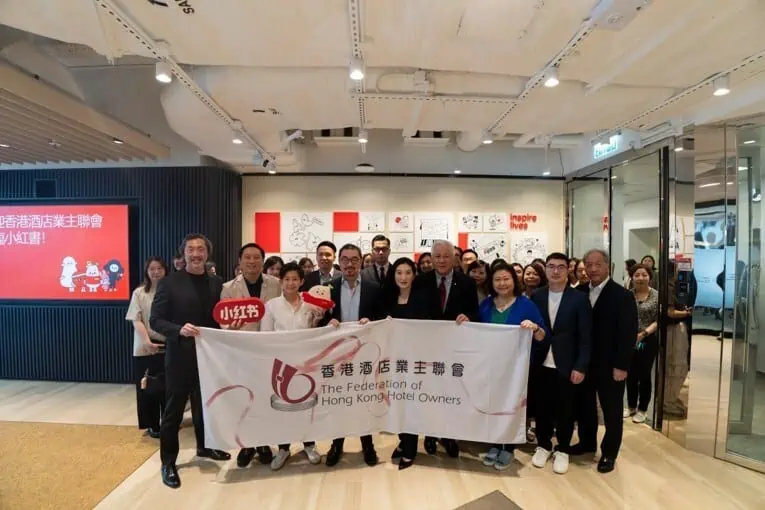
The Hong Kong Hotel Playbook Seminar, jointly organised by Xiaohongshu and the Federation of Hong Kong Hotel Owners, highlighted how content ecosystems are reshaping hospitality marketing across Asia.
Held at Xiaohongshu’s Hong Kong office, the seminar brought together cross-border commerce teams and hotel representatives to explore how Hong Kong properties can unlock sustained growth amid rising Hong Kong-bound tourism demand.
According to platform data, Xiaohongshu now supports over 400 million monthly active users, including more than 130 million outbound travel users, with travel-related search activity growing 38% year-on-year. Over 90% of users actively search travel content, positioning the platform as a key decision-making engine for outbound tourism planning.
Structural Pressures Facing Hong Kong Hotels
The seminar identified three persistent challenges in Hong Kong’s hotel sector:
- High OTA commission costs reducing margin control
- Rising labour and service delivery expenses
- Difficulty building long-term brand recognition in a saturated market
At the same time, traveller behaviour is shifting. Independent travellers—especially from Mainland China and international markets—now dominate booking decisions, relying heavily on content discovery rather than traditional travel agents.
Data from the Hong Kong Tourism Board indicates that 74.5% of hotel guests are independent travellers, with Mainland leisure travellers representing 60% of this segment.
How Xiaohongshu Is Reshaping Travel Decisions
Speakers at the seminar emphasised that Xiaohongshu functions as a full-funnel travel decision ecosystem:
- Browsing – Users discover destinations through visual storytelling
- Searching – Users actively seek hotel reviews and travel guides
- Deciding – Users confirm bookings through trusted recommendations and brand content
This structure enables hotels to influence decisions long before travellers enter OTA comparison platforms.
Audience Segmentation: Three Core Traveller Groups
Based on combined HKTB and Xiaohongshu data, Hong Kong hotels are encouraged to focus on three primary segments:
- Young Mainland travellers from tier-one cities seeking premium, experience-led stays
- Business travellers prioritising location, efficiency, and administrative convenience
- Families and entertainment-driven travellers, with women aged 30–45 as key decision-makers
This segmentation reflects how travel intent is increasingly shaped by lifestyle-driven content consumption rather than price comparison alone.
The Content-to-Conversion Funnel
Xiaohongshu outlined a structured conversion framework designed to reduce friction between discovery and booking:
- Visually strong cover images and short-form video to capture attention
- Guide-style and review-based content to answer travel intent queries
- Official brand account activity to reinforce trust and credibility
- Private messaging support to convert interest into bookings
This model creates a closed-loop system linking exposure directly to reservation behaviour.
Expert Commentary on Evolving Travel Behaviour
Dodo KWONG, Regional Head of Cross-border Asia & Middle East at Xiaohongshu, noted that Hong Kong-bound travel demand is expanding across shopping, urban exploration, and short-break experiences. However, she highlighted that cross-border merchants face longer conversion cycles and require consistent content optimisation and testing.
Meanwhile, Yingu, Platform Expert at Xiaohongshu Commercial Cross-border, emphasised that modern travellers evaluate hotels through multi-layered criteria including travel milestones, scenarios, and experiential value. Premium content and targeted advertising must work together to sustain conversion momentum.
Caspar TSUI of the Federation of Hong Kong Hotel Owners added that the seminar aims to equip hotels with practical tools to leverage Xiaohongshu’s ecosystem and attract higher-value travellers.
What This Means for Hong Kong Hospitality
The implications for Hong Kong hotels are clear: visibility alone is no longer enough. Growth now depends on sustained content engagement across multiple decision stages.
Hotels that adapt to Xiaohongshu’s ecosystem can potentially:
- Reduce dependency on high-commission OTA channels
- Build stronger emotional brand positioning
- Capture demand earlier in the travel planning journey
- Improve direct booking conversion efficiency
Conclusion
The seminar signals a broader shift in Asia’s hospitality landscape, where content platforms are becoming infrastructure for travel commerce. For Hong Kong hotels, Xiaohongshu represents not just a marketing channel, but a behavioural layer influencing how travellers discover, evaluate, and book stays.
Related Coverage
Japan’s Top Domestic Winter Travel Destinations for 2025 According to Agoda
Meliá Cuba Restructuring Signals Growing Pressure on Caribbean Tourism Operations
What Platform-Driven Hotel Distribution Means for the Global Hospitality Industry
