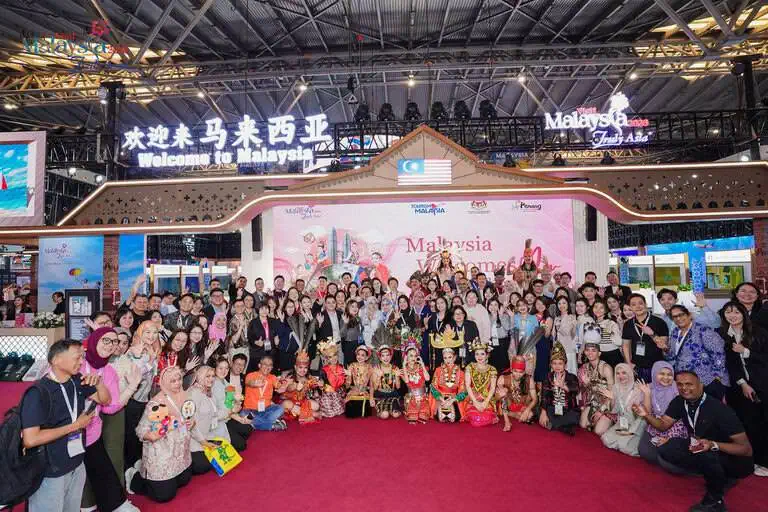
Chinese outbound travel is accelerating again across Asia, and Malaysia is moving aggressively to capture more demand ahead of Visit Malaysia 2026. Tourism Malaysia has launched its biggest-ever presence at ITB China 2026 in Shanghai, signaling intensifying competition among Asian destinations for Chinese travelers, long-stay visitors, and premium tourism spending.
The expanded showcase comes as Malaysia records a sharp rise in Chinese arrivals and increases air connectivity between the two countries, reinforcing the importance of China as one of Southeast Asia’s most valuable tourism markets. Disclosure: This article contains affiliate links. We may earn a commission at no extra cost to you.
Key Facts
- Tourism Authority: Tourism Malaysia
- Event: ITB China 2026
- Location: Shanghai World Expo Exhibition & Convention Center, China
- Event Dates: 26–28 May 2026
- Malaysia Pavilion Size: 504sqm
- Delegation Size: 63 tourism organizations
- Official Airline Partner: Malaysia Airlines
- Q1 2026 Chinese Arrivals to Malaysia: 1.4 million
- Growth Rate: Up 25.2% year-on-year
- Weekly Flights Between Malaysia and China: 744
- Monthly Seat Capacity: 148,999 seats in May 2026
Key Takeaways
- Malaysia is expanding aggressively in the Chinese outbound travel market.
- Air connectivity growth is supporting stronger regional tourism recovery.
- Visit Malaysia 2026 is driving international tourism promotion efforts.
- Cultural tourism remains central to Malaysia’s positioning strategy.
- Competition for Chinese travelers is intensifying across Asia.
What is Malaysia showcasing at ITB China 2026?
Tourism Malaysia is participating in ITB China for the seventh time, but the 2026 edition marks its largest presence yet. The expanded pavilion reflects Malaysia’s broader strategy to strengthen visibility in China as regional travel demand rebounds and competition among Asian destinations increases.
The Malaysian delegation includes state tourism boards, airlines, hotels, medical tourism representatives, travel agencies, and long-stay program operators. Participating organizations include Penang Global Tourism, Sabah Tourism Board, Tourism Melaka, Malaysia Convention & Exhibition Bureau (MyCEB), Islamic Tourism Centre (ITC), and Malaysia My Second Home (MM2H).
Tourism Malaysia hosts a Malaysia Night celebration during ITB China 2026 for the Malaysian delegation, buyers, and hosted media at TOTS Bar, Thompson Shanghai Expo Hotel.
Malaysia Airlines is also appearing independently as the event’s Official Airline Partner, while the Sarawak Tourism Board is conducting its own destination promotion activities.
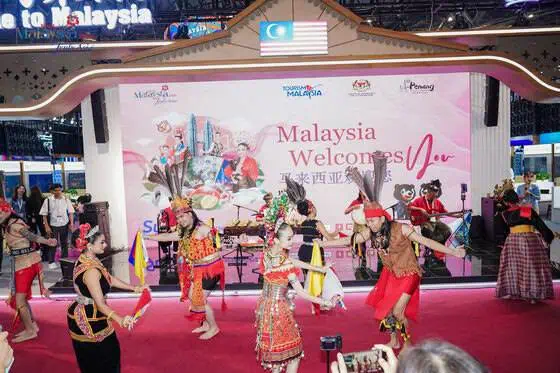
The pavilion highlights multiple tourism sectors simultaneously, including leisure tourism, business events, healthcare tourism, culinary travel, cultural experiences, and long-stay residency programs.
A press conference hosted by Tourism Malaysia during ITB China 2026. From left: Nuwal Fadhilah Ku Azmi, Senior Director of Tourism Malaysia, and Ooi Chok Yan, Chief Executive Officer of Penang Global Tourism.
Why does this matter for travelers?
Malaysia’s stronger focus on China comes as travelers increasingly seek destinations offering easier access, visa convenience, cultural diversity, and value-driven travel experiences.
The country’s growing flight network with China is becoming a major competitive advantage. In May 2026 alone, Malaysia and China are connected by 744 weekly flights with nearly 149,000 available seats, helping reduce travel friction and improve accessibility for both leisure and business travelers.
For Chinese visitors, Malaysia continues to position itself as a multi-segment destination that combines beaches, cities, nature, food, shopping, wellness, and cultural tourism within a single trip.
Tourism Malaysia is also emphasizing immersive cultural experiences at ITB China through live demonstrations including traditional pewter crafting, beadmaking, Wau-making, Malay massage, and Malaysian coffee experiences.
How does this impact the travel industry?
Malaysia’s expanded ITB China strategy reflects a wider tourism trend across Asia: destinations are competing more aggressively for high-spending Chinese travelers as outbound travel normalizes after years of disruption.
Chinese outbound tourism remains one of the region’s most economically influential travel segments. Countries that rebuild air connectivity quickly and maintain strong tourism marketing visibility are expected to gain market share.
Malaysia’s tourism growth numbers indicate positive momentum. The country welcomed 10.6 million international visitors between January and March 2026, up 5.4% compared with the same period in 2025.
The growth in Chinese arrivals is even more significant. China delivered 1.4 million visitors to Malaysia during the first quarter of 2026, a 25.2% increase year-on-year.
The figures reinforce the importance of China not only for Malaysia’s tourism recovery, but also for aviation demand, hotel occupancy, retail spending, and regional tourism investment.
What trend does this reflect?
Malaysia’s strategy reflects a broader shift toward experience-led destination marketing in Asia. Rather than focusing solely on sightseeing, tourism boards are increasingly promoting cultural immersion, wellness, culinary tourism, and long-stay travel experiences.
The inclusion of MM2H representatives, medical tourism operators, and cultural showcases also signals how destinations are diversifying beyond short-term leisure tourism.
Another emerging trend is the integration of aviation strategy into tourism promotion. Strong airline connectivity is now becoming as important as destination branding itself, especially in competitive regional markets.
Visit Malaysia 2026 is expected to accelerate these efforts further as Malaysia competes with destinations including Thailand, Japan, South Korea, Vietnam, and Singapore for regional tourism growth.
About the Destination
Malaysia remains one of Southeast Asia’s most diverse tourism destinations, attracting travelers with its mix of islands, rainforests, heritage cities, luxury resorts, culinary tourism, and multicultural experiences.
Destinations such as Kuala Lumpur, Penang, Langkawi, Sabah, Sarawak, and Melaka continue to benefit from growing regional air connectivity and rising Asian travel demand.
The country is also expanding its appeal in segments including medical tourism, Muslim-friendly tourism, eco-tourism, and long-stay travel programs.
With Visit Malaysia 2026 approaching, the country is expected to intensify international tourism campaigns across Asia and the Middle East.
Industry Insight
Malaysia’s expanded ITB China presence highlights how tourism boards are shifting toward ecosystem-based destination marketing that combines airlines, hotels, healthcare, culture, and long-stay programs under one strategy.
For travelers, this could mean more flight options, package competition, and broader travel experiences tailored to Chinese outbound demand.
For the industry, the development reinforces how tourism recovery in Asia is increasingly tied to aviation capacity restoration and targeted regional marketing campaigns.
Destinations able to combine strong connectivity with cultural differentiation are likely to outperform in the next phase of Asian tourism growth.
Check Availability and Travel Tools
Travelers planning trips to Malaysia can compare hotel and flight prices across platforms including Booking.com, Trip.com, Agoda, Expedia, and Klook to find the best deals for destinations such as Kuala Lumpur, Penang, Langkawi, Sabah, and Melaka.
- Compare hotel prices on Trip.com
- Book hotels on Booking.com
- Find hotel deals on Agoda
- Search hotel deals on Expedia
- Explore tours and travel experiences on Klook
Frequent travellers often rely on a variety of accessories, insurance and digital tools when planning trips. You can explore a curated list of travel tools we recommend and useful travel products for frequent travellers here.
This handmakes, fashionable footwear from Mar Soreli in Italy is also featured in our curated travel gear recommendations for frequent travelers.

Travelers interested in this story may also enjoy:
ITB China 2026 Opens in Shanghai as Global Travel Industry Returns in Force
The Ritz-Carlton, Langkawi Green Hotel Certification Awarded by Malaysia’s MOTAC
Perhentian Islands Named Malaysia’s Fastest-Growing International Destination in Agoda Ranking
DoubleTree Resort Penang Review – Sea View Stay Experience
Penang Marriott Hotel Opens on Gurney Drive in George Town
Iconic Marjorie Penang Review: Tribute Portfolio Stay in Bayan Lepas
H World Expands JI Hotel Brand into Malaysia and Cambodia
Tourism Malaysia Presents Culture, Cuisine, and Healthcare at Malaysia Fair 2025 in Surabaya
Malaysia Proudly Presents Malaysia Healthcare Week 2025 in Phnom Penh, Cambodia
Grand Opening of Park Hyatt Kuala Lumpur In Malaysia
Malaysia Airlines Launches Latest Global Campaign ‘Time for Premium Escapades’
Tourism Malaysia Showcases Nation’s Tourism Strength at ITB China 2025
