Europe could secure a larger share of global Travel & Tourism growth over the next decade by acting on eight strategic priorities, according to a new report from the World Travel & Tourism Council (WTTC), released at its 26th Global Summit in Valletta, Malta.
The report, Travel & Tourism in Europe: A Deep Dive Into Growth, Outlook and Policy, examines the sector’s economic contribution, employment, visitor spending, source markets and investment outlook through 2036. It also reviews existing policies across the European Union (EU) and the wider region, offering recommendations to improve growth and competitiveness.
The eight priorities align with WTTC’s global strategic priorities, approved by its Executive Council. They address travel facilitation, international market diversification, investment, sustainability, destination management, workforce development, artificial intelligence (AI) and connectivity.
The report comes as European countries introduce national tourism strategies, the European Commission prepares the EU’s first dedicated tourism strategy, and negotiations continue over the bloc’s 2028–2034 Multiannual Financial Framework (MFF).
Europe’s Travel & Tourism Sector Contributes Nearly US$3 Trillion
Travel & Tourism contributed almost US$3 trillion to Europe’s gross domestic product (GDP) in 2025, representing 9.4% of the region’s economy. The sector also supported 40.7 million jobs, or approximately one in every 10 jobs.
Countries outside the EU accounted for US$834 billion of that contribution, representing more than a quarter of the regional total. The United Kingdom remained Europe’s second-largest Travel & Tourism economy.
WTTC forecasts that the sector will grow by 3.1% in Europe in 2026, compared with projected growth of 1.1% for the wider European economy.
Gloria Guevara, President & CEO of WTTC, said:
“Europe already welcomes almost half of the world’s international travellers. As global travel keeps growing, Europe is well placed to extend that leadership, and the choices governments make now will decide how much of that growth comes here. Our research shows where policy can make the greatest difference: faster digital visas, more visitors from beyond Europe, stronger investment and a skilled workforce.
From new national tourism strategies to the EU’s first tourism strategy and its next long-term budget, policymakers across Europe have a rare opportunity to treat Travel & Tourism as the strategic sector it is. We stand ready to work with governments and institutions across the region to turn this ambition into results for communities across Europe.”
Eight Strategic Priorities for Europe’s Travel & Tourism Sector
1. Enhance Secure and Seamless Travel
Schengen states issued 5.3 million multiple-entry visas in 2025, 40% fewer than in 2019. Their share of all visas issued also declined, from 59% to 51.7%.
WTTC recommends accelerating the digital Schengen visa, restoring the use of multiple-entry visas and introducing an EU-wide trusted traveller scheme. The proposed scheme could include reciprocal recognition of programmes such as US Global Entry.
The organisation also calls for an agreed framework governing the use of biometric technology at EU airports.
2. Diversify International Visitor Markets
Europe remains heavily dependent on visitors from within the region. In 2025, 74.3% of international arrivals came from other European countries.
Excluding intra-European travel changes the region’s travel trade balance significantly. Its US$33.9 billion surplus becomes a deficit of approximately US$45 billion, as Europeans spend more on travel outside the region than visitors from beyond Europe spend there.
Meanwhile, arrivals from Asia-Pacific remain 4.8% below 2019 levels. Chinese arrivals are still 43.2% below pre-pandemic levels, while Japan and South Korea remain around 30% below those levels.
To diversify demand, WTTC recommends public-private marketing partnerships in long-haul markets, market-mix targets alongside visitor-volume targets, stable tourism promotion budgets and campaigns supported by easier visa access.
3. Increase Travel & Tourism Investment
Investment in Europe’s Travel & Tourism sector reached US$259 billion in 2025, an increase of 7.1% year on year. However, the figure remained 3.6% below 2019 levels.
Europe also trailed Asia-Pacific, which recorded US$395 billion in investment, and North America, at US$273 billion.
WTTC calls for Travel & Tourism to be recognised as a strategic ecosystem within the EU’s 2028–2034 MFF. This would include direct access to EU investment instruments.
The organisation also highlights the importance of legal certainty, regulatory stability and improved access to finance for small and medium-sized enterprises (SMEs).
4. Advance Sustainable Tourism
Travel & Tourism accounted for 6.3% of Europe’s greenhouse gas emissions in 2024. However, the sector’s emissions intensity declined by 14.8% between 2019 and 2024.
Mediterranean destinations accounted for 52.2% of Europe’s international visitor spending, making climate adaptation particularly relevant to the region. These destinations face significant exposure to heat and water stress.
WTTC recommends investment in climate adaptation, water and waste management, and nature protection. It also calls for faster adoption of sustainable aviation and maritime fuels, alongside improvements in physical and digital accessibility.
5. Strengthen Destination Management
International arrivals to Europe are forecast to reach 1.14 billion by 2036, up from 757.3 million in 2025.
Managing this growth will require coordination between tourism planning, housing, mobility and local services, according to WTTC’s recommendations.
The organisation advocates shifting from visitor-volume targets towards value-based measures. It also recommends using data tools to distribute visitors across destinations and seasons.
In addition, WTTC calls for transparent visitor levies, with revenue ringfenced for destination management.
6. Attract and Develop Tourism Talent
Travel & Tourism is a significant employer of young people in Europe. They account for 13.1% of the sector’s direct jobs, compared with 8.3% across the wider economy.
However, workforce demand is expected to outpace supply in some markets. By 2035, Germany and Greece are projected to face workforce shortfalls of 26% and 27%, respectively, relative to demand.
WTTC recommends developing apprenticeship pathways and expanding recognition of the Hospitality and Tourism Skills Passport. It also calls for the early completion of the UK-EU Youth Experience Scheme.
7. Support AI Adoption Across Travel & Tourism
WTTC identifies artificial intelligence as a potential tool for improving the sector’s competitiveness, resilience and responsiveness to changing traveller needs. AI could also help destinations manage visitor demand more effectively.
To ensure tourism businesses, particularly SMEs, can adopt the technology, the report calls for targeted support. Measures could include grants, skills training, expert advice and access to shared digital tools.
At the same time, WTTC recommends that AI regulation remain human-centred, transparent and proportionate. The aim is to support innovation while protecting travellers and enabling inclusive growth.
8. Expand Transport Connectivity
Stronger air, rail, maritime and road connections are important to facilitating travel and diversifying visitor markets. WTTC highlights the need to improve access to islands, rural areas and peripheral regions.
Better connectivity could extend the economic benefits of tourism, support year-round employment and ease pressure on destinations during peak periods.
The organisation recommends simpler multimodal journeys through interoperable travel information, accessible booking platforms and integrated ticketing across transport modes and borders.
It also calls for practical decarbonisation measures that expand lower-emission travel options while protecting essential air links to destinations with limited alternatives.
EU Policy Developments Create an Opportunity for Tourism
The report identifies several developments that could influence the future direction of European tourism policy.
These include the forthcoming EU Sustainable Tourism Strategy, the European Parliament’s April 2026 resolution calling for tourism to be treated as a strategic economic sector with dedicated funding, and the Council’s May 2026 conclusions.
Together, these initiatives provide an opportunity to place Travel & Tourism more prominently within the EU’s competitiveness agenda.
WTTC highlights public-private coordination, investment, connectivity and proportionate regulation as areas requiring attention as policymakers develop the next phase of the region’s tourism strategy.
Europe’s Travel & Tourism Economy at a Glance
Europe remained the world’s leading region for international tourism in 2025, recording 757.3 million international overnight arrivals. This represented 49.1% of the global total.
International visitor spending reached US$835 billion, accounting for 41% of worldwide spending.
Germany was Europe’s largest Travel & Tourism economy, contributing US$566 billion, followed by the United Kingdom at US$380 billion, France at US$312 billion and Spain at US$291 billion.
Spain led the region in international visitor spending, with US$130 billion. Its in-destination spending per visitor reached US$796, or 1.7 times the European average.
Malta Records Growth Ahead of the Wider Economy
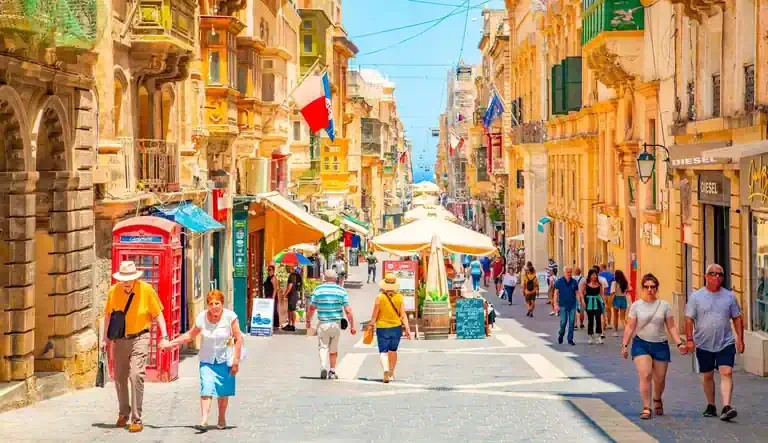
Malta, host of WTTC’s 26th Global Summit, was among Europe’s stronger-performing tourism markets in 2025.
Travel & Tourism contributed US$4.6 billion to the Maltese economy, an increase of 16.8%, compared with 4% growth across the wider economy. The sector accounted for 16.6% of GDP and supported one in five jobs.
International visitor spending in Malta reached US$3.9 billion, 47.5% above its 2019 level.
Sector Contribution Forecast to Reach US$3.8 Trillion by 2036
Over the next decade, Europe’s Travel & Tourism contribution to GDP is forecast to grow at an annualised rate of 2.2%, reaching US$3.8 trillion by 2036.
Employment supported by the sector is projected to exceed 50 million jobs by that year, an increase of 8.3 million compared with 2026.
The WTTC report sets out policy priorities for governments and institutions seeking to capture a greater share of that projected growth, while addressing investment, workforce, sustainability and connectivity challenges across Europe.
Related Coverage
WTTC Strengthens Hotel Sustainability Basics with Independent Certification Framework
WTTC Report: Europe Leads Global Tourism as Italy Hosts 25th Global Summit in Rome
India’s Travel & Tourism Economy Set for Major Global Growth
